
The Biggest Train Crashes in History - Lessons Written in Steel
Railways are among the safest transportation systems ever built, yet some events in history remind us how fragile early infrastructure, communication systems, and human decision-making once were. For train lovers, understanding the biggest train crashes in history is not about tragedy for tragedy’s sake—it’s about appreciating how far rail engineering and safety standards have evolved.
From structural failures to communication breakdowns, each disaster pushed the industry toward better signaling, stronger rolling stock, and stricter operational procedures. Here are the most catastrophic railway accidents ever recorded, what went wrong, and how these events reshaped rail safety worldwide.
1. 2004 Sri Lanka Tsunami Train Disaster – The Deadliest Rail Accident Ever Recorded
Location: Peraliya, Sri Lanka
Estimated fatalities: ~1,700 (widely accepted, though not officially confirmed)
On December 26, 2004, the “Queen of the Sea” commuter train was struck by the Indian Ocean tsunami triggered by one of the strongest earthquakes in modern history. The wave derailed and crushed all eight coaches.
This remains the deadliest train disaster ever documented.
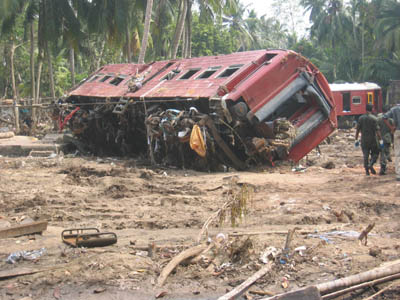
Photo: 2004 Sri Lanka tsunami train wreck, public domain (Wikimedia Commons)
Safety lessons:
-
Railways near coastal zones now incorporate tsunami-warning integration.
-
Emphasis on emergency evacuation protocols during natural disasters.
2. 1981 Bihar Train Derailment – India
Location: Near Bagmati River, Bihar, India
Estimated fatalities: 500–800 (records vary significantly)
Heavy monsoon rains and a possible flash flood caused a passenger train to derail and plunge into the river. Limited documentation exists, but it is considered one of the deadliest accidents in India’s railway history.
Safety lessons:
-
Better flood monitoring and bridge reinforcement.
-
Implementation of rainfall-triggered slow-order zones.
3. 1917 Saint-Michel-de-Maurienne Derailment – France
Location: Maurienne Valley, French Alps
Fatalities: ~700
A troop train overloaded with French soldiers returning from the Italian front lost braking power on a steep mountain grade. The wooden coaches caught fire after derailing.
It is still Europe’s deadliest rail disaster.
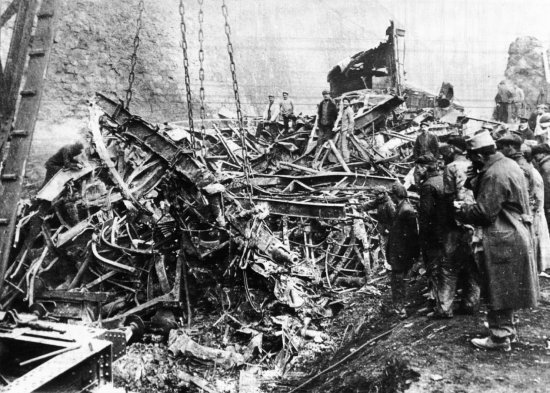
Accident ferroviaire de Saint-Michel-de-Maurienne (1917)” (Public Domain via Wikimedia Commons)
Safety lessons:
-
Strict braking capacity calculations for gradients.
-
Speed control enforcement on mountain lines.
4. 1989 Ufa Train Explosion – USSR (Russia)
Location: Near Ufa, Bashkortostan
Fatalities: ~575
Injured: ~600
A liquefied gas pipeline leak near the railway released vapors into the valley. When two trains passed simultaneously, sparks ignited the gas cloud, creating one of the largest explosions in railway history.
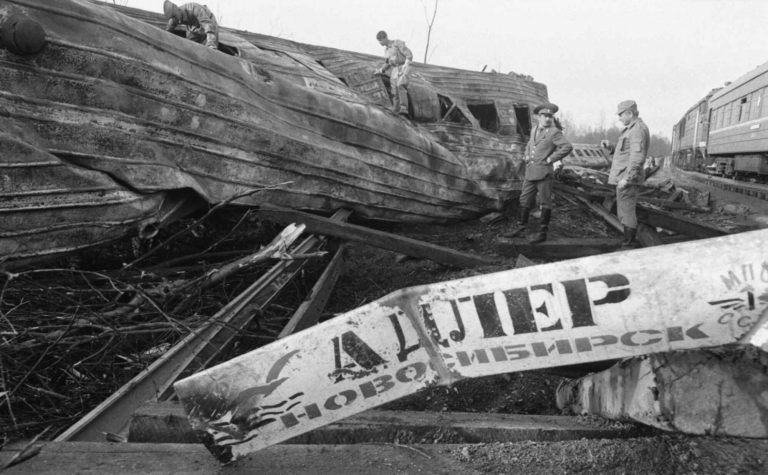
Ufa train disaster photo by [author on file page], CC BY-4.0 via Wikimedia Commons.
Safety lessons:
-
Mandatory separation zones between pipelines and rail corridors.
-
Improved gas leak detection technologies.
5. 1998 Eschede Train Disaster – Germany
Location: Eschede, Lower Saxony
Fatalities: 101
Germany’s worst modern rail accident involved an ICE 1 high-speed train. A fatigue crack in a wheel tire caused catastrophic failure at 200 km/h, derailing the train.
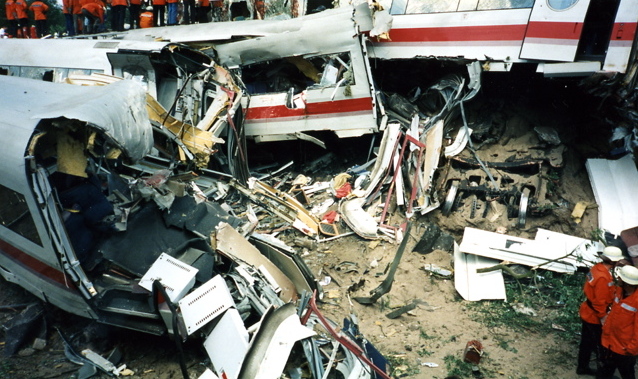
Eschede train wreck photo (via Wikimedia Commons) — see file page for author & license.
Safety lessons:
-
Continuous ultrasonic wheel inspection.
-
Wheel design transition from tire-based to monobloc wheels.
6. 1918 Great Train Wreck of Nashville – USA
Location: Nashville, Tennessee
Fatalities: 101–121 (records vary)
A head-on collision between two steam trains due to signaling and dispatching miscommunication. It remains the deadliest train crash in U.S. history.
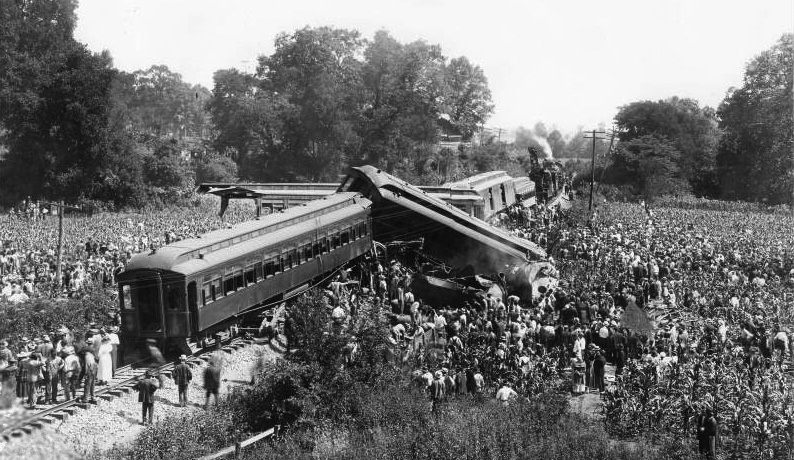
Photo: Great Train Wreck of 1918 (public domain via Wikimedia Commons)
Safety lessons:
-
Modern centralized traffic control (CTC).
-
Fail-safe signaling systems.
7. 1952 Harrow & Wealdstone Rail Crash – United Kingdom
Location: Hertfordshire, England
Fatalities: 112
A morning commuter train was rear-ended, and a third express train then plowed into the wreckage. One of the UK’s worst peacetime disasters.
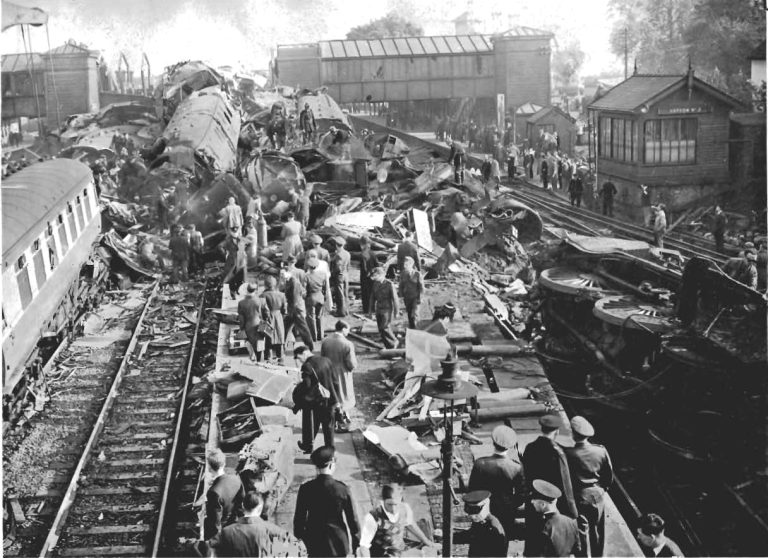
Harrow & Wealdstone crash photo (via Wikimedia Commons) — see file page for author/license.
Safety lessons:
-
Widespread adoption of AWS (Automatic Warning System).
-
Emphasis on signal approach control.
8. 1944 Balvano Train Disaster – Italy
Location: Balvano, Basilicata
Fatalities: ~500–600
A freight-and-passenger mixed train stalled in a tunnel, where steam locomotives saturated the tunnel with carbon monoxide. Most passengers suffocated.
Safety lessons:
-
Complete elimination of steam locomotives in long tunnels.
-
Ventilation engineering standards.
9. 1957 Guadalajara Train Disaster – Mexico
Location: Guadalajara, Jalisco
Fatalities: ~300
Brake failure on a steep descent caused a runaway passenger train to derail. This remains Mexico’s worst railway accident.
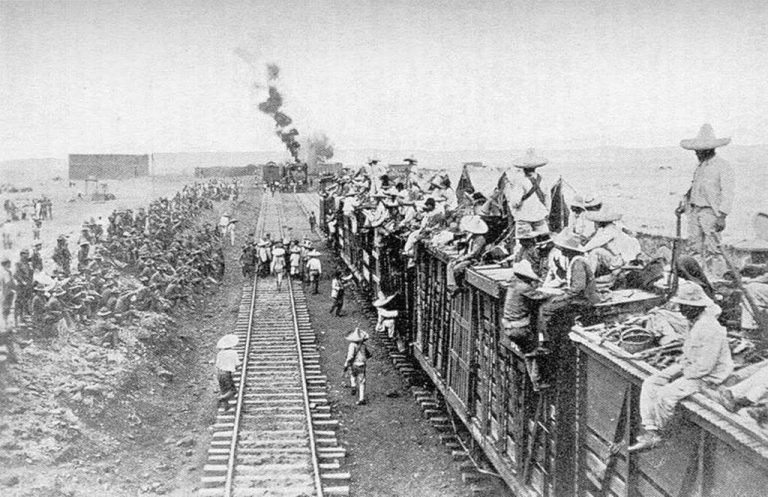
Guadalajara train (1915) photo (via Wikimedia Commons) — see file page for author/license.
Safety lessons:
-
Enhanced brake redundancy.
-
Runaway-train escape ramps in mountainous regions.
10. 1960 Havana Train Crash – Cuba
Location: Havana
Fatalities: ~100+
A high-speed collision caused by incorrectly set points led to one of Cuba’s worst recorded rail disasters.
Safety lessons:
-
Strengthened switch monitoring.
-
Operator fatigue management.
How Rail Safety Transformed After These Accidents
Every one of the biggest train crashes in history contributed to safety innovations that are standard today:
-
Automatic Train Protection (ATP)
-
Centralized Traffic Control (CTC)
-
Redundant braking systems
-
Crash-energy-management (CEM) car designs
-
Real-time track and wheel monitoring
-
Strict maintenance cycles across rolling stock
Modern rail travel is now one of the safest engineered systems on Earth, thanks to lessons written in steel over nearly two centuries. And for train lovers – and players of strategy titles like TrainStation Games – understanding this evolution adds awe to every locomotive and every mile of track.
Play the TrainStation Games
Exploring the biggest train crashes in history shows not only how accident lessons shaped rail safety, but why modern railways are among the safest transport systems on Earth. If analyzing history and mastering logistics excites you, jump into TrainStation 2 and TrainStation 3: Journey of Steel.
These railroad games combine strategic planning with immersive train simulator features, letting you experience the challenges of keeping a network safe and efficient. Every turn becomes a lesson in resilience, just like the real railways evolved after historic accidents.
👉 Stay connected with the TrainStation community on Facebook TrainStation Games, Instagram, YouTube or WhatsApp Updates, where rail enthusiasts, builders, and virtual train conductors share their love for trains every day.