
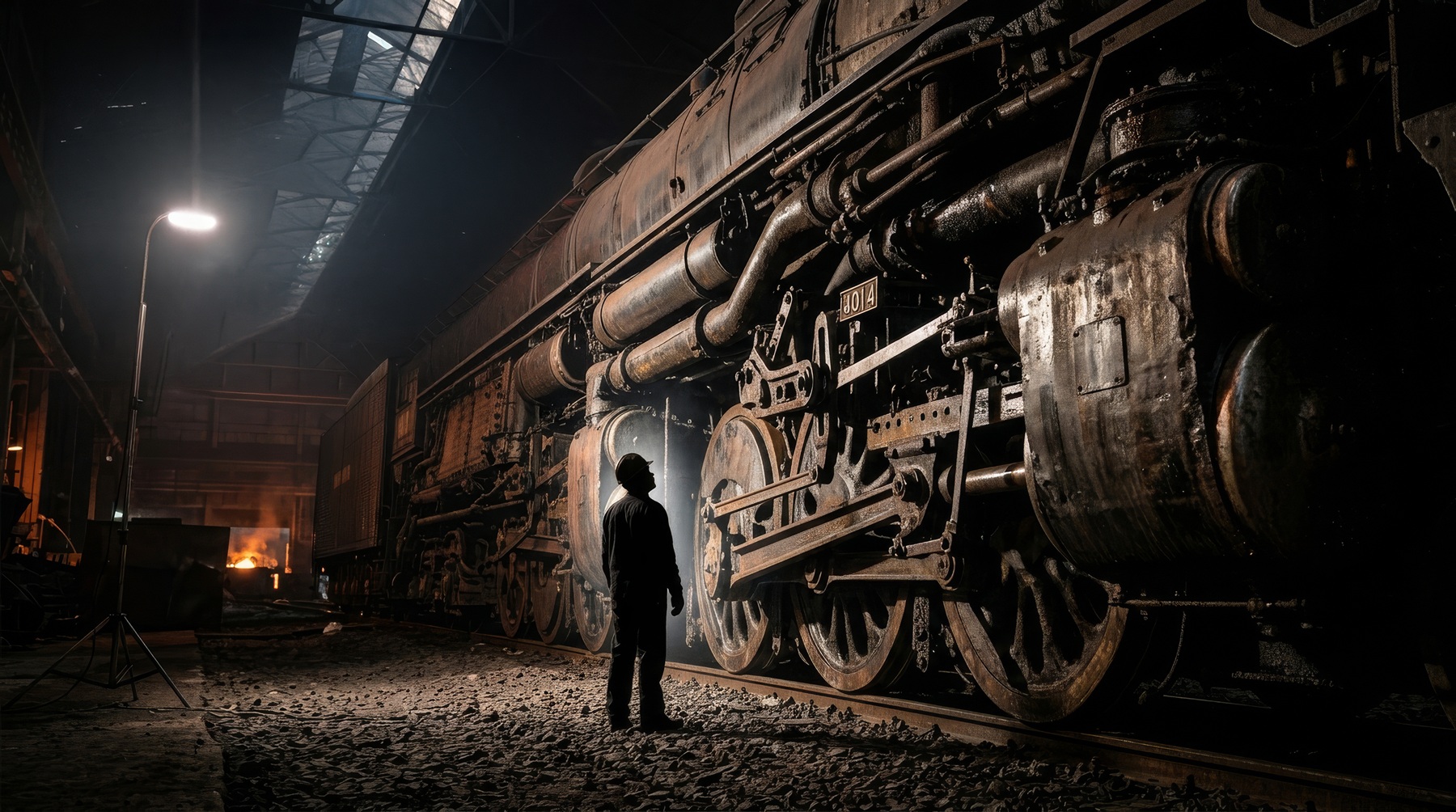
5 Largest Trains in History
From giant steam locomotives to modern electric freight machines, railway engineering has always pushed the limits of size, power and pulling force. Some locomotives were built to haul enormous coal trains across mountain routes. Others were designed to move thousands of tons of freight using advanced electric traction. And some rail vehicles are so specialized that they can transport industrial components weighing hundreds of tons.
And if you love powerful machines, there’s more to explore in TrainStation 2 and TrainStation 3: Journey of Steel. Alongside collecting legendary locomotives and building your railway empire, you can take on special in-game events featuring heavy machinery and other impressive engineering.
In this episode of Trainstories, we explore five rail monsters that show just how far engineers have pushed the boundaries of railway technology.
Our lineup includes the legendary C&O Allegheny steam locomotive, China’s powerful Shen 24 electric locomotive, a giant Schnabel heavy-load car, Union Pacific’s enormous DDA40X diesel, and the experimental Soviet VL86F electric locomotive.
These machines are not all the same type of railway vehicle, and they do not hold the same kind of record. But each represents an extraordinary engineering solution to one challenge: moving more weight, delivering more power, or transporting cargo that ordinary trains simply cannot handle.
1. C&O Allegheny: One of the Largest Steam Locomotives Ever Built
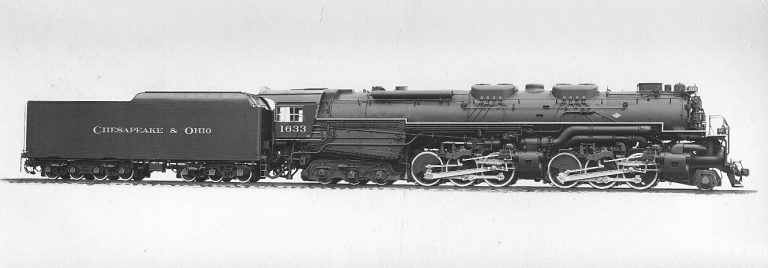
The Chesapeake & Ohio Allegheny was one of the heaviest and most powerful steam locomotives in history, designed to haul enormous freight trains over the demanding grades of the Allegheny Mountains.
Built by Lima Locomotive Works for the Chesapeake & Ohio Railway, the H-8 class entered service in 1941. Its unusual 2-6-6-6 wheel arrangement combined two groups of six driving wheels with a leading truck and a six-wheel trailing truck. That trailing truck supported the enormous firebox needed to produce the steam required for heavy freight work.
The Allegheny was a giant even by the standards of American steam locomotives. With its tender fully loaded, it weighed approximately 1.2 million pounds, or around 544 metric tons. Its boiler operated at 260 psi, and its four cylinders measured 22.5 inches in diameter.
The locomotive could produce around 7,500 drawbar horsepower under favorable operating conditions. Drawbar horsepower measures the power available to pull the train after accounting for the locomotive’s own movement, making it especially useful when comparing heavy-haul performance.
That output came at a price: enormous demands on fuel, maintenance and railway infrastructure. The Allegheny’s firebox required a mechanical stoker to feed coal continuously, while its weight placed substantial loads on the rails.
Although the Union Pacific Big Boy is often the first locomotive people think of when discussing giant steam engines, the Allegheny deserves a place alongside it. The two locomotives were designed for different railroads and operating conditions, so deciding which was simply “the biggest” depends on the measurement used.
Did you know? Two Chesapeake & Ohio Alleghenies survive today. No. 1601 is displayed at The Henry Ford Museum of American Innovation in Dearborn, Michigan, while No. 1604 is preserved at the B&O Railroad Museum in Baltimore.
2. CRRC Shen 24: A Modern Heavy-Haul Powerhouse
Steam locomotives once represented the cutting edge of heavy freight engineering. Today, the challenge is often solved with high-powered electric traction.
Unveiled in China in July 2020, the CRRC Shen 24 is a six-section electric locomotive formation developed for heavy-haul freight operations on the Shenshuo Railway. Designed to move massive coal trains, it combines several connected locomotive sections into one coordinated power system.
The Shen 24 measures approximately 106 meters long, making it longer than many complete passenger trains. Its rated power reaches 28,800 kilowatts, equivalent to roughly 38,600 mechanical horsepower. Its reported starting tractive effort is 2,280 kilonewtons.
Power alone is not enough to move a loaded freight train safely. Engineers must also manage adhesion, braking, wheel-rail forces and the stresses placed on couplings throughout the train. On heavy-haul routes, regenerative braking can help control a train on long descents by converting some of its motion back into electrical energy.
The Shen 24 uses coordinated control systems to manage its multiple sections and distribute power across the locomotive formation. Its design reflects a modern approach to freight railroading: rather than relying on one enormous engine, combine multiple powered sections and manage them as an integrated system.
Its scale also highlights the importance of China’s dedicated heavy-haul rail corridors, which carry vast quantities of coal and other bulk materials.
Why it matters: The Shen 24 demonstrates how modern railway technology can combine enormous power with computerized control to move heavy freight efficiently.
3. CEBX 800 Schnabel Car: The Rail Vehicle That Carries Its Cargo Between Its Arms
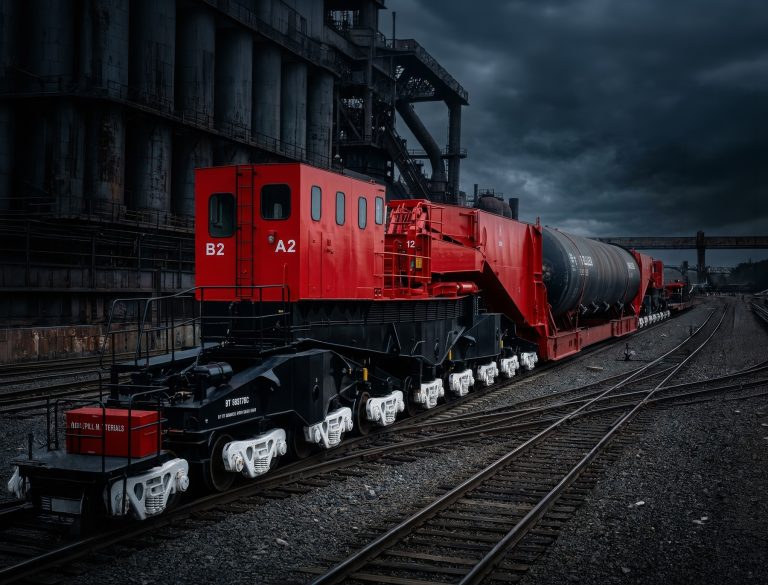
Not every rail monster is a locomotive. Some of the most remarkable railway vehicles are designed to transport cargo that would be impossible to move on a conventional freight car.
The CEBX 800 is a specialized Schnabel car, built by Krupp in Germany for heavy industrial transport in North America. Instead of placing an oversized load on top of a flatcar, a Schnabel car supports the load between two articulated structural arms.
The cargo becomes part of the overall transport arrangement, suspended between the two halves of the car. This configuration helps distribute the load across a large number of axles and allows the vehicle to accommodate components that are too wide, tall or heavy for ordinary freight equipment.
The CEBX 800 has 36 axles and 72 wheels. Its original design was intended for exceptionally heavy industrial loads, such as large power-generation components. Depending on the cargo and route, specialized rail movements may require detailed clearance surveys, bridge-load calculations and temporary operating restrictions.
One of the most impressive features of Schnabel cars is their hydraulic handling equipment. Operators can adjust the position of the suspended load vertically and horizontally, helping it clear obstacles along the route. The movement is carefully controlled because even a small clearance problem can stop a special transport.
The CEBX 800 is a reminder that the largest rail transport challenges are not always about speed or horsepower. Sometimes the real achievement is moving a single oversized industrial component through a railway network built for much more ordinary loads.
Did you know? In a Schnabel transport, the cargo itself sits between the two main arms of the car. That makes the load and the rail vehicle a carefully engineered transport system rather than a simple package carried on a platform.
4. EMD DDA40X Centennial: The Largest Single-Frame Diesel Locomotive
The Union Pacific Railroad has a long history of operating powerful locomotives, from legendary steam engines to some of the largest diesel machines ever built. The EMD DDA40X, better known as the Centennial, took the diesel concept to an extraordinary scale.
Introduced in 1969, the DDA40X was built by General Motors’ Electro-Motive Division exclusively for Union Pacific. Its name celebrated the centennial of the completion of the first transcontinental railroad in 1869.
At 98 feet 5 inches long, the DDA40X remains famous as the longest and most powerful production single-frame diesel-electric locomotive. It delivered 6,600 horsepower from two turbocharged 16-cylinder EMD 645E3A diesel engines mounted in one long body.
Each engine powered its own generator system, supplying electricity to the locomotive’s traction motors. The result was a single locomotive with the output of two powerful diesel units, without needing to couple two separate locomotives together.
The Centennial also served as a testbed for electrical and control-system improvements that influenced later EMD designs. But its size came with practical limitations. A single giant locomotive was less flexible than a group of smaller units that could be added or removed according to a train’s needs.
Union Pacific received 47 DDA40X locomotives between 1969 and 1971. They hauled freight across the railroad’s extensive network before being retired from regular service in the 1980s.
The DDA40X remains one of the most striking examples of American diesel engineering: a machine designed to deliver extraordinary power in one frame.
Did you know? The DDA40X had eight powered axles arranged in two four-axle trucks. Its 6,600 horsepower came from two diesel engines, not one.
5. Soviet VL86F: An Experimental Electric Locomotive Ahead of Its Time
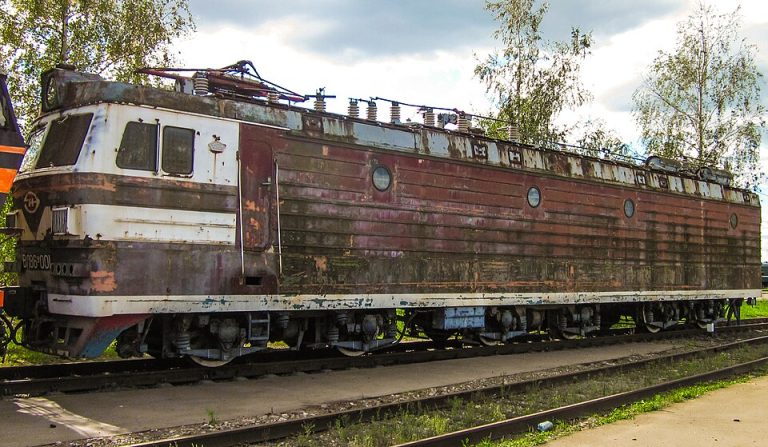
The fifth rail monster is less famous than the Allegheny or the Centennial, but its engineering makes it especially interesting.
The VL86F was an experimental Soviet freight electric locomotive developed at the Novocherkassk Electric Locomotive Plant in cooperation with Finnish electrical engineering company Strömberg. The single prototype was completed in 1985.
Unlike conventional electric locomotives of its era, the VL86F used three-phase asynchronous traction motors. These motors were supplied through power-electronic converters, a technology that helped pave the way for more sophisticated electric traction systems.
The locomotive consisted of two sections and produced a combined continuous power output of approximately 10,800 kilowatts, with a higher short-duration rating of around 11,400 kilowatts. That is equivalent to roughly 14,500 continuous mechanical horsepower and more than 15,000 horsepower at the higher rating.
Its twelve powered axles helped distribute the locomotive’s weight while delivering substantial tractive effort. This combination of power and adhesion was important for freight operations, where a locomotive must start heavy trains and maintain control under demanding conditions.
The VL86F remained an experimental machine rather than becoming a mass-produced class. Its advanced traction equipment made it an important technical step, but a prototype alone could not establish whether the design would be economical and practical across a large fleet.
The locomotive’s story illustrates a recurring theme in railway history: an experimental machine can be important even if it never becomes a common sight on the tracks.
What Makes a Train One of the Largest in the World?
There is no single answer to the question of which is the largest train or locomotive ever built. Engineers measure size and performance in several different ways.
- Length: A locomotive such as the DDA40X is remarkable for its enormous single-frame body, while a multi-section locomotive such as the Shen 24 is much longer as a complete formation.
- Weight: The C&O Allegheny reached around 544 metric tons with its tender loaded, making it one of the heaviest steam locomotive-and-tender combinations.
- Power: The Shen 24’s 28,800 kW rating places it among the most powerful electric locomotive formations. The DDA40X delivered 6,600 horsepower in one diesel-electric locomotive.
- Tractive effort: This measures pulling force, especially important when starting heavy freight trains or climbing steep grades.
- Load capacity: Specialized vehicles such as the CEBX 800 are designed to move enormous individual components rather than haul ordinary freight trains.
These distinctions matter because the largest locomotive is not necessarily the most powerful, and the most powerful locomotive is not necessarily capable of moving the heaviest train on every route. Track conditions, gradients, braking, couplings and operating rules all influence what a railway can move safely.
Watch Trainstories: Five Rail Monsters That Pushed Engineering to the Limit
From the coal-burning power of the C&O Allegheny to the advanced electric traction of the Shen 24, these five machines reveal different ways engineers have tackled the challenge of moving enormous loads.
Some were built for everyday freight service. Others explored new technologies or solved highly specialized transport problems. Together, they show that railway engineering is about more than building a bigger engine: it is about finding the right balance of power, weight, traction and control.
Watch the latest episode of Trainstories on YouTube to see these five rail monsters in action and discover what makes each one extraordinary.
Which machine impressed you most? Was it the giant steam power of the Allegheny, the modern might of the Shen 24, or the engineering ingenuity of the CEBX 800? Subscribe to TrainStation Hub for more railway history, legendary locomotives and engineering stories.
And if you want to put legendary locomotives to work on your own railway, join us in TrainStation 2 and TrainStation 3: Journey of Steel.
See you on the tracks.
FAQ
What are the largest trains in the world?
The answer depends on whether size means total train length, locomotive length, weight or hauling capacity. Notable examples include China’s Shen 24 electric locomotive formation, the C&O Allegheny steam locomotive, and specialized heavy-load rail vehicles such as the CEBX 800 Schnabel car.
What is one of the largest steam locomotives ever built?
The Chesapeake & Ohio H-8 Allegheny is one of the largest and most powerful steam locomotives ever built. With its tender loaded, it weighed approximately 544 metric tons and could produce around 7,500 drawbar horsepower under favorable conditions.
What is the most powerful diesel locomotive ever built?
The EMD DDA40X Centennial is widely recognized as the most powerful single-frame production diesel-electric locomotive. It produced 6,600 horsepower using two diesel engines and measured 98 feet 5 inches long.
How powerful is China’s Shen 24 locomotive?
The six-section Shen 24 has a rated output of 28,800 kW, equivalent to approximately 38,600 mechanical horsepower, and a reported starting tractive effort of 2,280 kN. It was unveiled in 2020 for heavy-haul freight operations.
What is a Schnabel railcar used for?
A Schnabel railcar transports oversized, exceptionally heavy industrial components between two supporting arms. Hydraulic systems can adjust the load’s position to help it clear obstacles along the route. The CEBX 800 is a notable 36-axle example.
What was the Soviet VL86F?
The VL86F was a two-section experimental Soviet electric freight locomotive built in 1985. It used three-phase asynchronous traction motors and power-electronic converters, with a reported continuous output of 10,800 kW.