
Ghost Trains and Abandoned Railways Around the World
There’s a special thrill in seeing tracks reclaimed by grass, platforms frozen in time, and station clocks stopped mid-tick. For railfans, abandoned railways and “ghost trains” tell stories of changing industry, shifting borders, technological leaps, and sometimes plain bad luck. This guide walks through eight of the most evocative abandoned lines and stations around the world – each with history, context, and a royalty-free image you can use in your article.
1) Yaniv (Janiv) Railway Station – Chernobyl Exclusion Zone, Ukraine
Once the rail gateway for the workers and supplies serving the Chernobyl power complex and the town of Pripyat, Yaniv (Janiv) Railway Station sits frozen since the 1986 nuclear disaster. Rust, broken glass and moss make it a powerful symbol of sudden abandonment. The rail siding and station buildings are now part of the exclusion-zone landscape visited by researchers and licensed tours.
Why it’s haunting: A functioning station stopped overnight by a disaster, with vintage signage and rolling stock left behind.
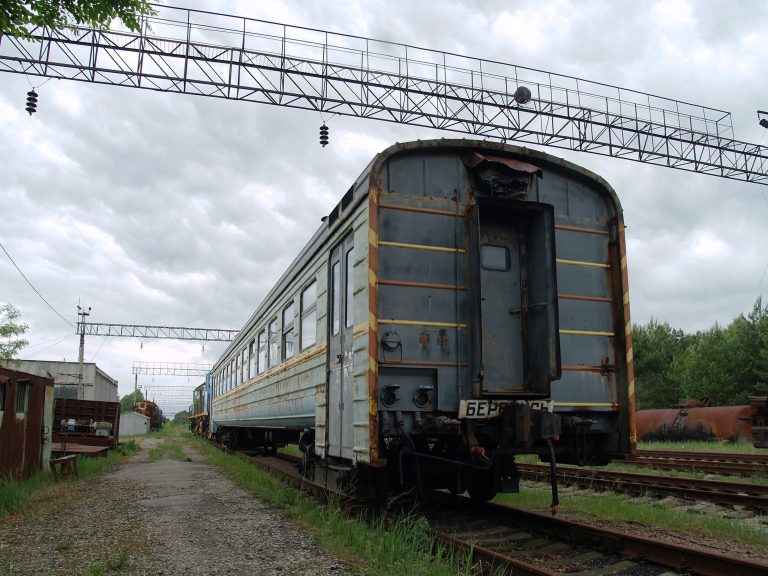
Photo: Yaniv (Janiv) Railway Station, Chernobyl Exclusion Zone (author on file page, via Wikimedia Commons).
2) Ushima Station – Noto Line, Ishikawa Prefecture, Japan
Ushima was a small rural stop on the Noto Line that closed when the line was partially abandoned. The empty platform and the quiet sea breeze make for classic “Japanese abandoned station” imagery — delicate, melancholy, and photogenic.
Why it’s haunting: Rural platforms and signage left in place long after the trains stopped.
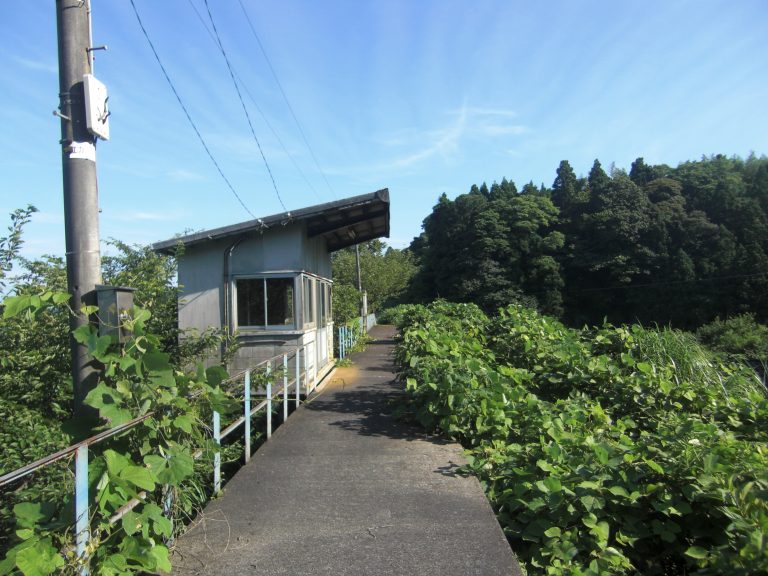
Photo: Ushima Station platform (author on file page, via Wikimedia Commons).
3) Varvara Railway Station (Septemvri–Dobrinishte line) – Bulgaria
Small mountain stops like Varvara show the rural, very European side of abandoned rail: painted station buildings, cracked platforms, and a rail line that once served tiny communities and mountain tourism.
Why it’s haunting: The sense of an entire local transport life paused mid-story.
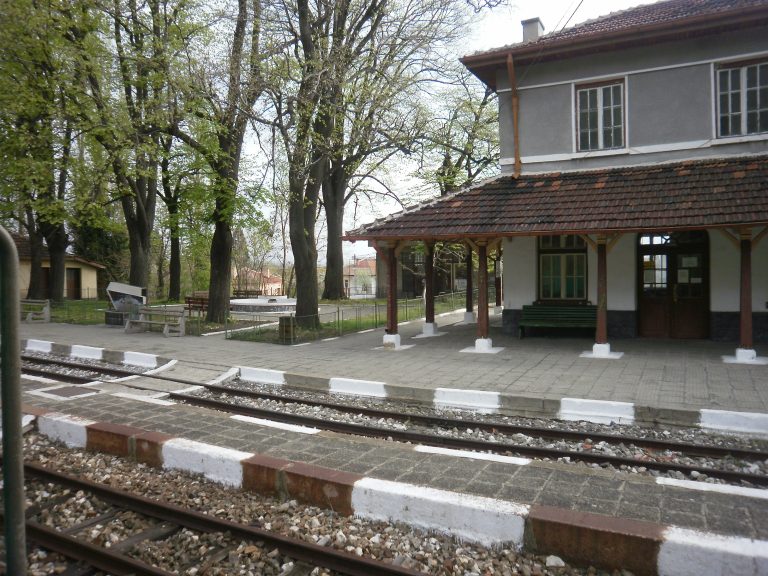
Photo: Varvara Railway Station (author on file page, via Wikimedia Commons).
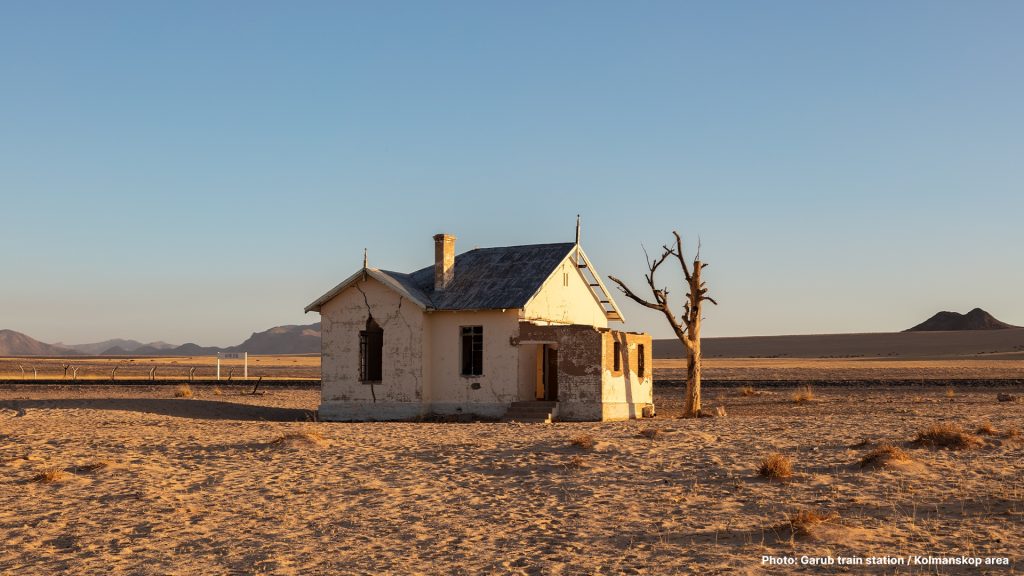
4) Garub / Kolmanskop (Namibia) – Desert station near Kolmanskop
The Namib desert swallowed towns and their small stations as diamond booms faded. Images of Garub and the Kolmanskop area — tracks half-buried in sand and derelict platforms — are surreal and iconic.
Why it’s haunting: Nature reclaiming rail infrastructure in the desert is visually striking and unusual.
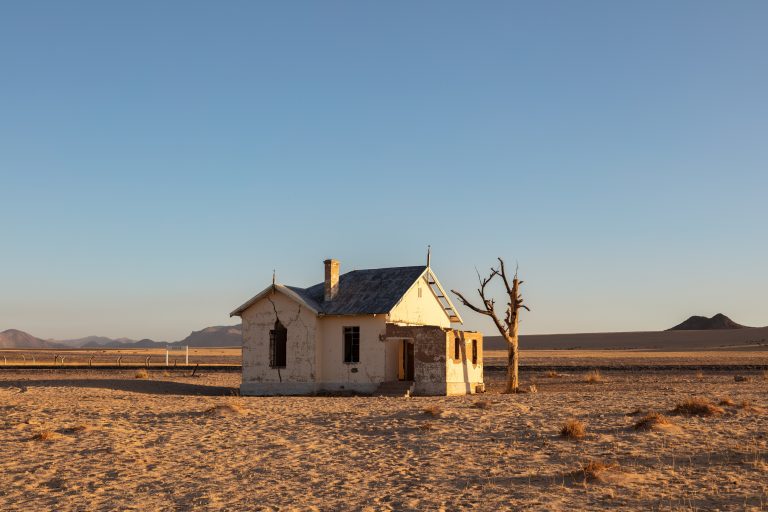
Photo: Garub train station / Kolmanskop area (author on file page, via Wikimedia Commons).
5) Higashi-Nemuro Station (Hokkaido, Japan) – Easternmost/Closed stations in Hokkaido
Hokkaido is dotted with disused platforms and signal posts from lines that once served remote communities. Many of these stations are photographed and shared under free licenses – the stark, snowy landscapes give them a cinematic feel.
Why it’s haunting: Snow, silence, wooden platforms — a Nordic-like emptiness at the end of the line.
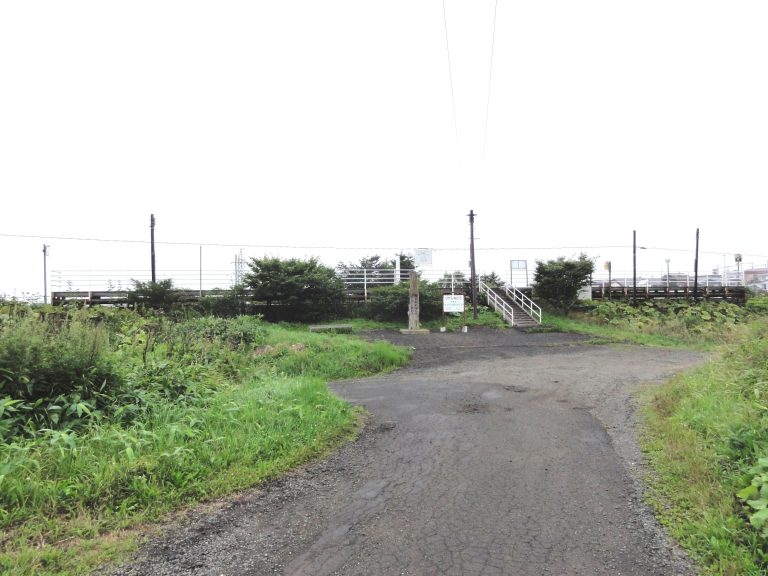
Photo: Higashi-Nemuro Station (author on file page, CC BY-SA 3.0 via Wikimedia Commons).
6) Resiutta – Pontebbana old station (Friuli-Venezia Giulia, Italy)
Rust, cracked paint and a shuttered booking office — small Italian lines like the Pontebbana’s defunct sections have elegant, decaying station buildings that make great photos and compelling urban-archaeology reads.
Why it’s haunting: Historic masonry and signage left to the elements, with mountains as a backdrop.
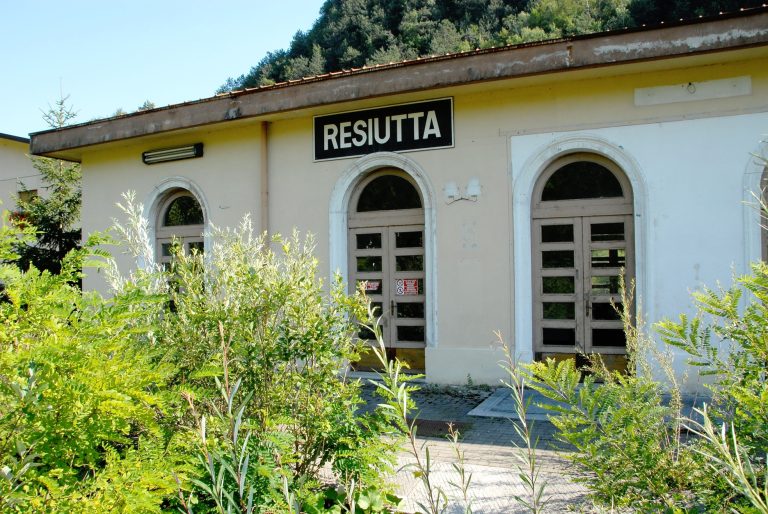
Photo: Resiutta defunct Pontebbana station (author on file page, via Wikimedia Commons / Wikimedia Italia).
7) Abandoned stations in Poland (examples: Smolno Wielkie / Kłobuck)
Poland’s rural network has many closed stops with evocative buildings: cracked plaster, boarded windows and grassy platforms. Commons hosts a selection of these photos under permissive licenses.
Why it’s haunting: Eastern European railway architecture often looks like a forgotten era.
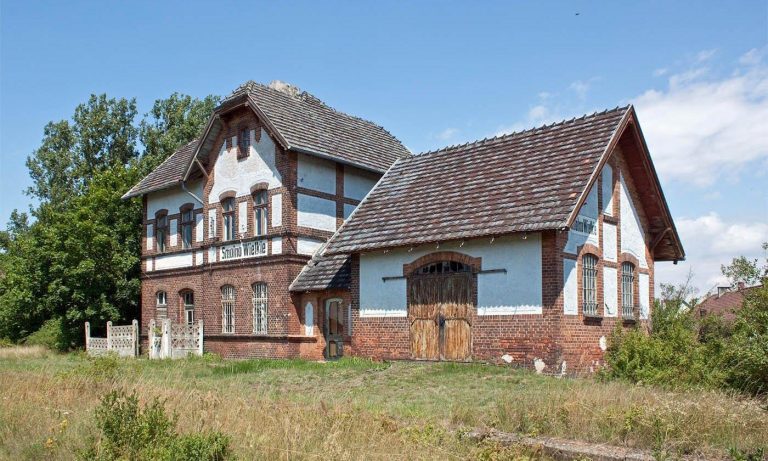
Photo: Abandoned train station in Smolno Wielkie (author on file page, via Wikimedia Commons).
8) Beelitz-Heilstätten Station area (Beelitz, Germany) – disused hospital rail sidings and stations
The Beelitz complex is famous as an abandoned hospital campus, but the site also includes old rail sidings and smaller stations that served the sanatoriums and military hospitals. The decayed infrastructure and ivy-covered rails make strong “ghost railway” visuals.
Why it’s haunting: Vast complexes of empty buildings linked by forgotten tracks — cinematic and eerie.
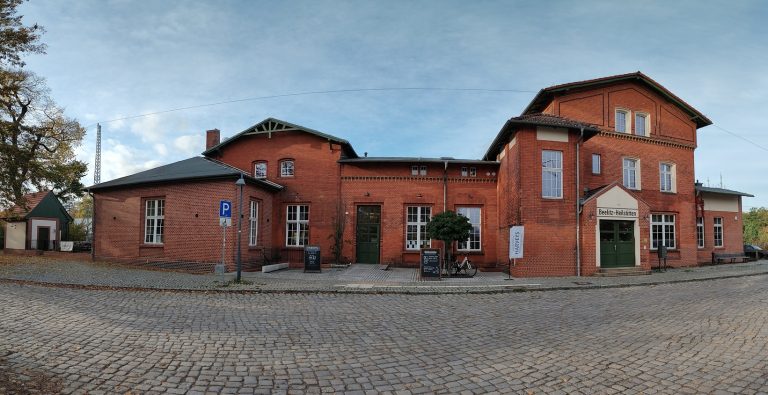
Photo: Beelitz-Heilstätten station building by Paspal, CC BY-SA 4.0 via Wikimedia Commons.
The Quiet Echo of Tracks Left Behind
Abandoned railways and so-called “ghost trains” remind us that every rail line has a story – not just of engineering and transportation, but of the people, towns, and eras they once connected. Whether it’s a disused Alpine tunnel, an overgrown rural branch line, or a forgotten station reclaimed by nature, these sites show how railways evolve with the world around them. For railfans and explorers, they offer a special kind of magic: history you can still stand inside, steel that remembers the past, and tracks that whisper what once was.
Play the TrainStation Games
Whether it’s a forgotten mountain siding or a derelict station overgrown with grass, abandoned railways and ghost trains remind us how rich and layered railway history truly is. And if you love those stories of lost tracks and silent signals, you’ll enjoy reliving them in TrainStation 2 and TrainStation 3: Journey of Steel — two of the best train games online for railway hobbyists.
These games let you craft your own lines, preserve classic locomotives, and imagine new routes where old ones once lay. It’s like a train simulator online free that celebrates every chapter of railroading — past, present, and future.
👉 Stay connected with the TrainStation community on Facebook TrainStation Games, Instagram, YouTube or WhatsApp Updates, where rail enthusiasts, builders, and virtual train conductors share their love for trains every day.