
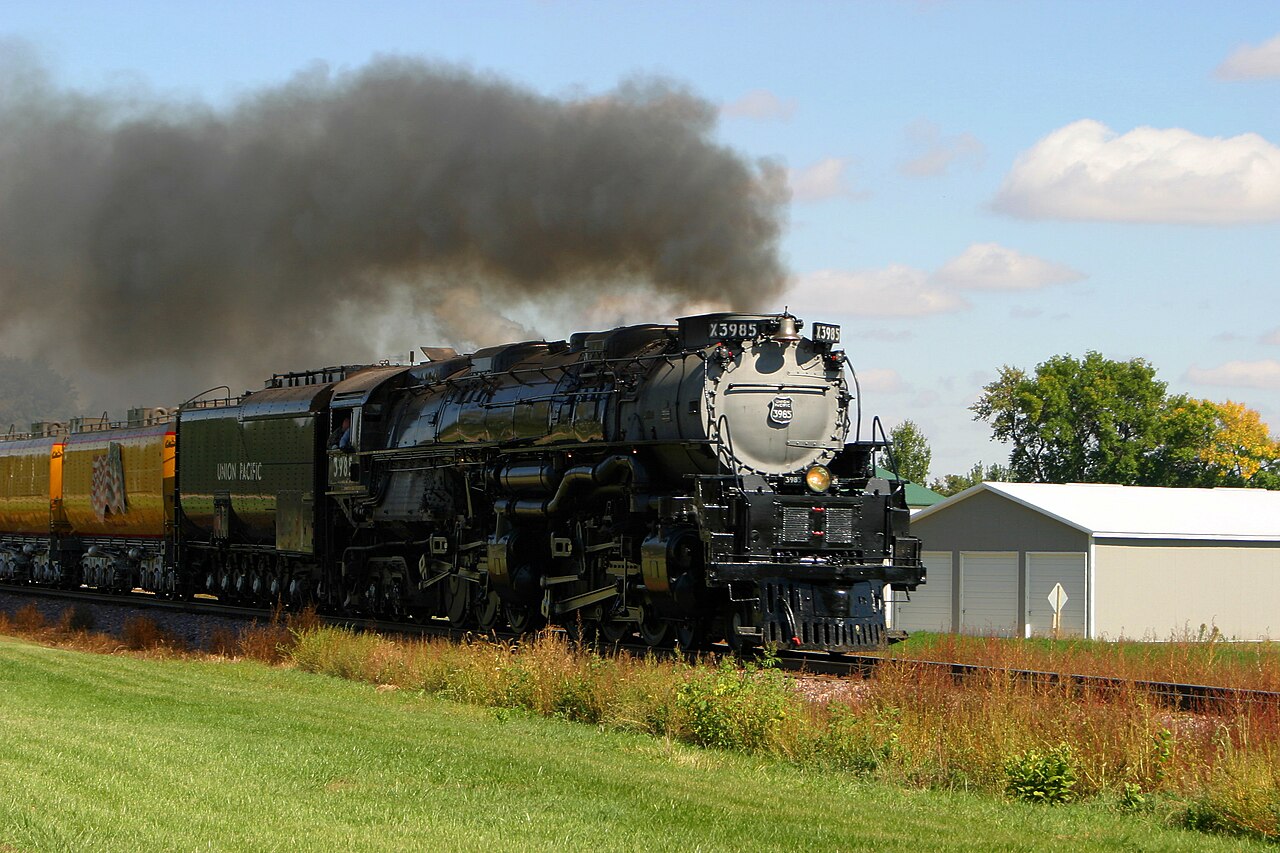
UP Challenger - The High-Speed Steam Giant That Helped Create the Big Boy
Before diesel locomotives took over American railroads, Union Pacific faced a problem that demanded an extraordinary engineering solution. The railroad needed a locomotive powerful enough to haul heavy freight across difficult mountain territory – but simply adding more power was not enough. Union Pacific also needed speed. The result was the Union Pacific Challenger, a massive 4-6-6-4 articulated steam locomotive built to combine two things that did not usually go together: enormous pulling power and fast freight operation.
Today, the Challenger is often introduced as the smaller predecessor of the famous Big Boy. But that description does not quite do it justice. The Challenger was its own engineering achievement. It helped redefine what an articulated steam locomotive could do, carried freight at speeds more commonly associated with passenger locomotives, and provided important operating and design experience that helped shape the development of Union Pacific’s most famous steam giant.
In the latest episode of Iron Icons, we take a closer look at this remarkable machine – and why some railroaders and railfans consider the Challenger one of the most versatile steam locomotives Union Pacific ever operated.
For train lovers, the Union Pacific Challenger is one of the most fascinating examples of American steam engineering. For us, it’s exactly the kind of locomotive story that continues to inspire the legendary machines we bring into modern train games like TrainStation 2 and TrainStation 3: Journey of Steel.
What Was the Union Pacific Challenger?
Watch the full episode of iron Icons:
The Union Pacific Challenger was a family of articulated steam locomotives with a 4-6-6-4 wheel arrangement. Union Pacific acquired a total of 105 Challengers between 1936 and 1944, with the locomotives built by the American Locomotive Company, better known as ALCO.
The name describes the wheel arrangement:
- 4 leading wheels
- 6 driving wheels in the front engine unit
- 6 driving wheels in the rear engine unit
- 4 trailing wheels supporting the large firebox
In simple terms, a Challenger was essentially two sets of driving engines operating beneath one enormous boiler.
That arrangement gave Union Pacific something unusual: a locomotive with the power of an articulated freight engine, but with large 69-inch driving wheels and a design intended for much faster operation than traditional slow-speed articulated locomotives. And that difference is the key to understanding the Challenger.
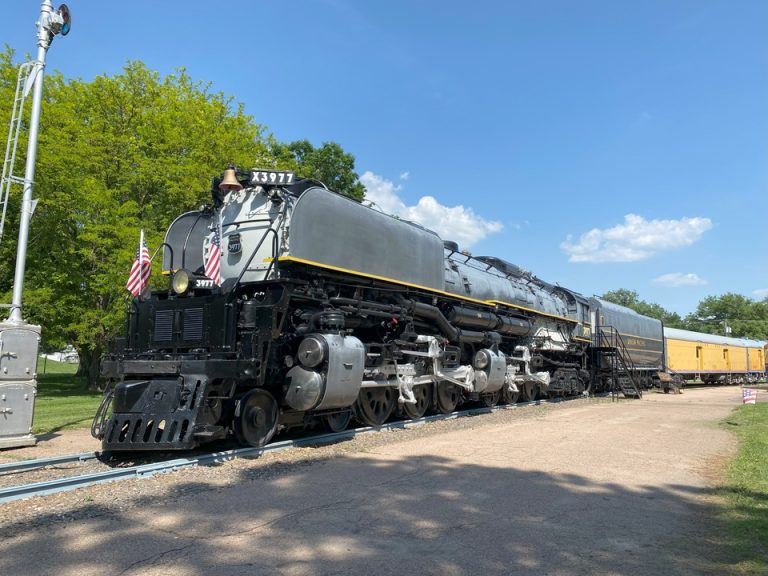
UP 3977 in the afternoon sun, June 2023, 80 years after she was built. Author: Fan Railer
Built for Fast Freight, Not Just Heavy Freight
The Union Pacific Challenger was not designed simply to drag the heaviest possible train at the lowest possible speed.
It was designed to keep freight moving. Union Pacific operated across enormous distances, including demanding mountain territory where grades, curves, weather, and train weight could quickly slow operations. The railroad needed a locomotive capable of handling heavy trains while maintaining higher average speeds.
Later Challenger classes developed around 97,350 pounds of tractive effort, while the locomotive’s design and 69-inch drivers allowed speeds of up to about 70 mph under suitable conditions. For a locomotive weighing more than one million pounds with its tender, that was an extraordinary combination. This was the Challenger’s real personality. It was not just a mountain brute. It was a fast freight locomotive on a gigantic scale.
The Engineering Trick: Two Engines Under One Boiler
Looking at a Challenger from the side, it is easy to wonder how something nearly 122 feet long could negotiate mountain curves at all. The answer was articulation. The locomotive had two separate sets of driving wheels beneath a single boiler. The front engine unit could pivot beneath the locomotive, allowing the enormous machine to negotiate curves that would have been impossible for a rigid locomotive of similar length. Watching an articulated steam locomotive enter a curve creates one of the most fascinating sights in railroading. The running gear follows the curve while the huge boiler appears to swing across the landscape above it.
It looks dramatic because it is. But it was also a highly practical solution to one of the biggest engineering problems facing large steam locomotives: how do you make a bigger machine without making it impossible to operate on an existing railroad? The Challenger answered that question. And it answered it well enough to change Union Pacific’s future locomotive development.
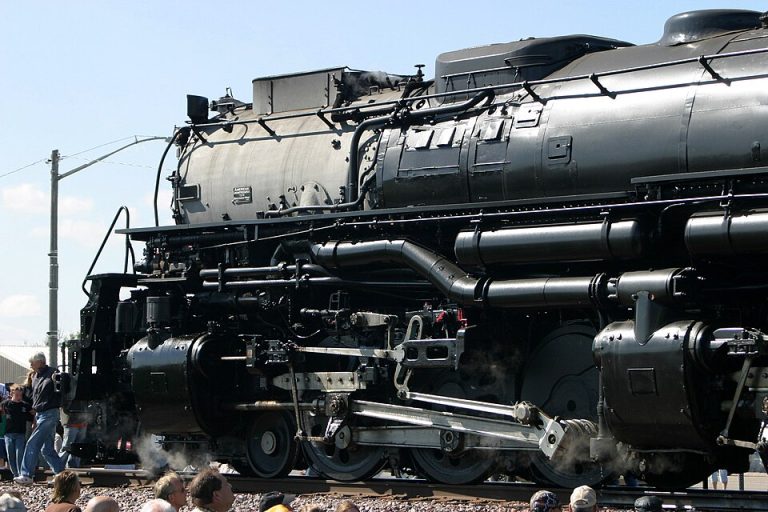
Author: Mark Evans from Alton, USA
The Challenger Was More Than One Locomotive Design
One lesser-known fact about the Union Pacific Challenger is that there was no single, completely uniform Challenger design. The railroad acquired the locomotives in several groups. The first 40 locomotives, delivered in 1936 and 1937, belonged to the CSA-1 and CSA-2 classes. These earlier Challengers were lighter than the later versions. Then came the heavier 4664 classes, built during the early 1940s.
This evolution matters because the Challenger was not a static design. Union Pacific and ALCO continued refining the concept as railroad requirements changed and wartime traffic increased. Some locomotives were converted between coal and oil firing during their careers. Renumbering also became surprisingly complicated, meaning the history of an individual Challenger can be more difficult to trace than many railfans expect. For a locomotive class often remembered as one simple type, the Challenger family was actually full of variations.
A Few Challengers Even Entered Passenger Service
Another detail often overlooked is that the Challenger was not limited entirely to freight trains. Union Pacific primarily designed the locomotives for freight service, but some were also assigned to passenger operations through mountain territory. This makes perfect sense when you look at the design. The Challenger had the power needed for steep grades and heavy trains, but it also had the ability to operate at higher speeds than many traditional articulated freight locomotives. Some units used in passenger service became visually distinctive, including examples fitted with smoke deflectors often nicknamed “elephant ears.” It is one of the reasons the Challenger is so interesting as a railroad machine: it could be a heavy freight hauler one day and a capable mountain passenger locomotive the next.
The Challenger and World War II
The Challenger arrived at exactly the right moment for Union Pacific. During World War II, American railroads became essential to moving troops, raw materials, military equipment, and supplies across the country. Rail traffic increased dramatically, and Union Pacific’s mountain routes became even more important. The Challenger’s combination of power, speed, and reliability made it particularly valuable during this period. It was not built as a glamorous technological experiment. It was a working locomotive designed to solve real transportation problems at a time when American railroad capacity was under enormous pressure. That practical role is one reason why the Challenger deserves more attention. Big Boy became the legend. But the Challenger was already proving what Union Pacific’s high-performance articulated steam could accomplish.
The Challenger Helped Create the Big Boy
By the end of the 1930s, Union Pacific still faced a major challenge on the grades of the Wasatch Mountains. The Challenger was powerful, but wartime freight trains were becoming heavier. On the steepest parts of the route, Union Pacific wanted a locomotive capable of handling more tonnage without the operational complexity of additional power. The answer would become the 4-8-8-4 Big Boy. The Challenger’s design and operating experience provided an important starting point for this next generation of locomotive. The new engine required more power and more tractive effort, so the concept was enlarged and extensively redesigned. The result added another driving axle to each engine unit and became one of the largest and most famous steam locomotive designs ever built. But the story did not simply move from Challenger to Big Boy and end there.
Later Challenger development also benefited from lessons learned during Union Pacific’s continuing steam locomotive program. That creates a fascinating engineering loop: The Challenger helped lead to the Big Boy, while the knowledge gained during the development of larger and later steam locomotives continued to influence Union Pacific’s approach to its existing designs.
Watch the iron Icons Episode #4 – Big Boy Story
Big Boy vs Challenger: Which Was the Better Locomotive?
This is where the debate gets interesting.
Big Boy was larger.
Big Boy produced more tractive effort.
Big Boy was built to handle enormous freight loads across the Wasatch Mountains.
But bigger does not automatically mean better for every job.
The Challenger was lighter, more versatile, and designed for faster freight service. Its 69-inch drivers gave it a speed advantage over locomotives designed primarily for maximum low-speed pulling power.
For many types of railroad work, the Challenger was simply a better fit.
That is why comparing the two locomotives only by size misses the point.
The Big Boy was a specialist created to solve one of Union Pacific’s toughest freight problems.
The Challenger was closer to an all-round high-performance machine.
And that may be why some crews and enthusiasts have long argued that, if they had to choose one articulated Union Pacific steam locomotive for everyday railroad work, they would choose the Challenger.
Experience legendary locomotives in TrainStation games
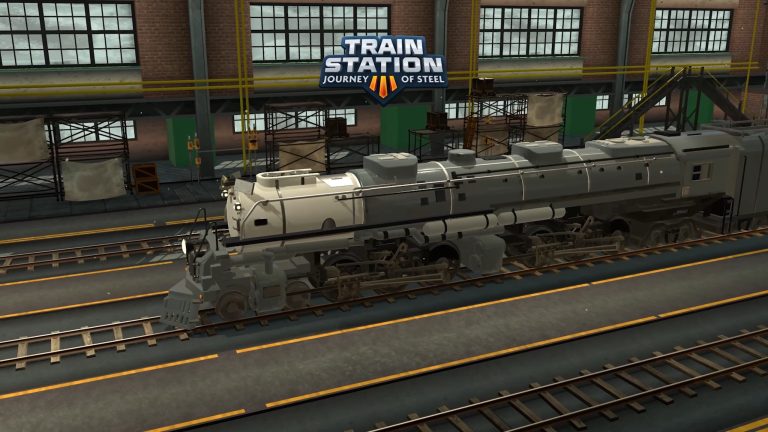
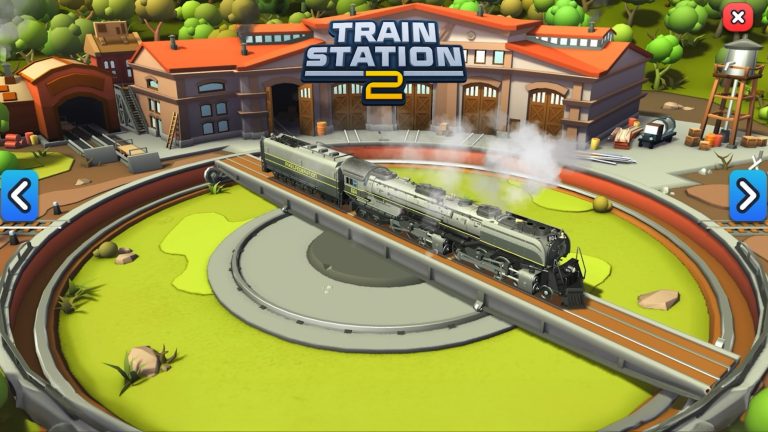
Of course, reading about a 4-6-6-4 articulated steam locomotive is one thing. Seeing the enormous driving wheels move through a curve is another. And if you want to bring the Challenger into your own railroad, you can find this legendary locomotive in TrainStation 2 and TrainStation 3: Journey of Steel.
>> PLAY TrainStation 3: Journey of Steel HERE <<
>> PLAY TrainStation 2 HERE <<
Frequently Asked Questions About the Union Pacific Challenger
How fast could the UP Challenger go?
The Challenger was designed for faster freight service than many other articulated steam locomotives. With its 69-inch driving wheels, it was capable of operating at speeds of up to approximately 70 mph under suitable conditions, although actual operating speeds depended on the route, train weight, and railroad regulations.
How powerful was the Union Pacific Challenger?
Later Challenger locomotives developed around 97,350 pounds of tractive effort. Their articulated design and large boiler allowed them to haul heavy freight trains across challenging mountain routes while maintaining relatively high speeds.
What is the difference between the UP Challenger and Big Boy?
Both were articulated Union Pacific steam locomotives, but they were designed for different purposes. The 4-6-6-4 Challenger was lighter and more versatile, with larger driving wheels suited to faster freight service. The 4-8-8-4 Big Boy was larger and developed to produce greater tractive effort for extremely heavy trains on demanding mountain grades.
Did the Challenger help inspire the Big Boy?
Yes. Union Pacific’s experience with Challenger locomotives played an important role in the development of the Big Boy. The Big Boy expanded on the articulated steam concept, using four driving axles in each engine unit instead of the Challenger’s three.
How many Union Pacific Challengers still exist?
Only two Union Pacific Challengers survive today: No. 3977, preserved in North Platte, Nebraska, and No. 3985, which previously operated in Union Pacific’s steam program and is now undergoing restoration.
Where can I see a Union Pacific Challenger today?
Union Pacific No. 3977 is preserved on display in North Platte, Nebraska. No. 3985 is being restored by Railroading Heritage of Midwest America and is not currently operating.