
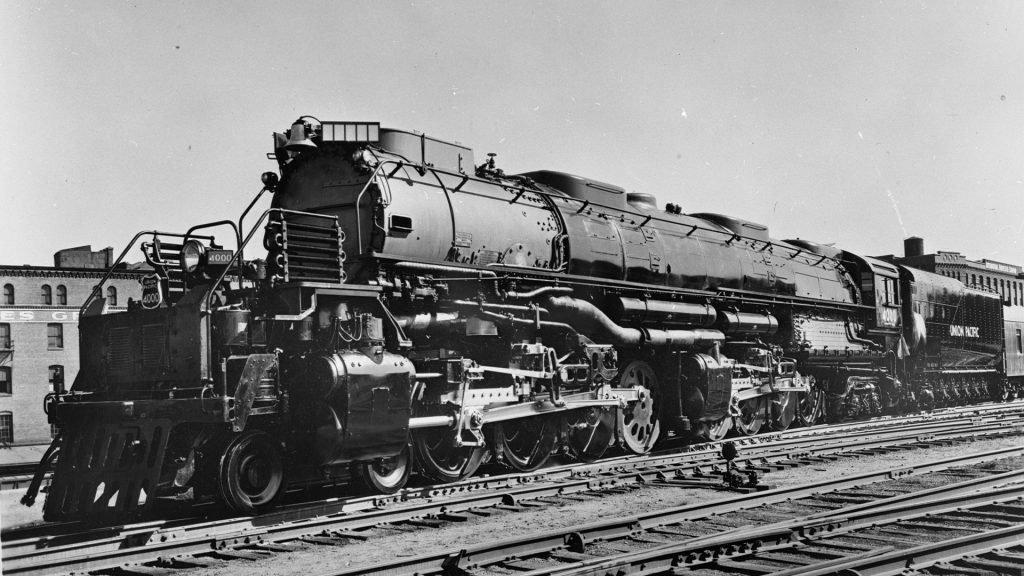
Big Boy 4014 - The Steam Giant That Refused to Be Forgotten
The engineering, controversy, and hidden stories behind America’s most legendary steam locomotive
Some locomotives become famous because they are fast. Others because they are beautiful. But the Union Pacific Big Boy became legendary because it feels almost impossible.
More than 130 feet long, weighing around 1.2 million pounds, and capable of producing over 6,000 horsepower, the Big Boy 4014 remains one of the most iconic steam locomotives ever built. Even today, decades after the end of the steam era, railfans still gather trackside with cameras in hand whenever Big Boy appears on the rails.
In the latest episode of our Iron Icons series, we explore the history, engineering, and lesser-known stories behind the locomotive that became the ultimate symbol of American railroad power.
▶ Watch the episode:
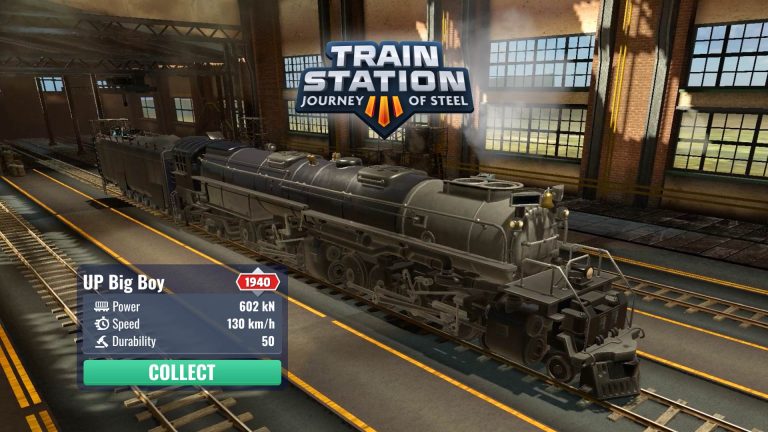
For train lovers, it remains one of the most important trains ever built. For us, it is also one of the machines that reminds us why railroad history matters – and why legendary trains continue to inspire everything from railway documentaries to modern train games like TrainStation 2 and TrainStation 3: Journey of Steel.
What Is the Big Boy Locomotive?
The Union Pacific Big Boy was a class of massive articulated steam locomotives built by ALCO (American Locomotive Company) between 1941 and 1944 for Union Pacific Railroad.
Its purpose was simple:
haul enormous freight trains through the steep grades of the Wasatch Mountains between Utah and Wyoming without needing helper locomotives.
At the time, mountain freight operations were one of the biggest operational challenges in American railroading. Big Boy was Union Pacific’s answer.
And it worked.
Big Boy 4014 Specs – The Numbers Railfans Love
The reason so many enthusiasts search for terms like “Big Boy 4014”, “UP Big Boy”, or “Big Boy train” becomes obvious once you look at the numbers.
Big Boy locomotive specifications:
- Wheel arrangement: 4-8-8-4
- Length: over 132 feet
- Weight: approximately 1.2 million pounds
- Horsepower: over 6,000 HP
- Tractive effort: over 135,000 pounds
- Fuel consumption: up to 12 tons of coal per hour
- Boiler pressure: 300 psi
This was not a locomotive built for elegance.
It was built for raw freight-hauling power.
Its massive firebox was so large that feeding it manually would have been impossible, which is why Big Boy used a mechanical stoker capable of feeding hundreds of pounds of coal every minute.
The Hidden Engineering Genius Behind Big Boy
What makes Big Boy fascinating is not just its size.
It’s the fact that something this enormous could actually move efficiently through mountain railroad curves.
To solve this problem, engineers used an articulated frame design, allowing the locomotive to bend through curves despite its extreme length.
This is one of the details many casual readers overlook:
Big Boy was not simply oversized.
It was carefully engineered to survive terrain that destroyed weaker locomotives.
In many ways, it represented the absolute peak of steam locomotive engineering – arriving just before diesel-electric locomotives would begin replacing steam across America.
The Railroad Problem Big Boy Was Built to Solve
One of the most misunderstood things about Big Boy is why it existed at all.
Some people assume it was built mainly as a publicity stunt or a symbol of power.
In reality, Union Pacific had a very practical operational problem:
heavy freight trains struggled on the steep Wasatch grades.
Before Big Boy, railroads often needed helper locomotives to assist trains uphill. That meant:
- more crews
- more delays
- more operational complexity
- higher costs
Big Boy reduced the need for helper engines and made freight movement more efficient across difficult mountain territory.
It was essentially a giant solution to a giant railroad problem.
Lesser-Known Facts About Big Boy Most Railfans Don’t Know
Many articles repeat the same facts about Big Boy. But some of the most interesting details are less widely known.
“Big Boy” Was Never Meant to Be the Name
Originally, the locomotives were expected to be called the Wasatch Class.
The famous nickname reportedly appeared when a worker wrote “Big Boy” in chalk on the smokebox during construction.
Union Pacific decided the name was too good to ignore – and railroad history was made.
It Arrived at the Wrong Time
Big Boy represented the peak of steam engineering…
just as the steam era was beginning to end.
Diesel-electric locomotives soon proved cheaper and easier to maintain. In hindsight, Big Boy feels almost like the final masterpiece of an aging technology.
That contradiction is part of what makes it so fascinating today.
The Smoke Was a Serious Problem
At high speeds, Big Boy crews sometimes struggled with visibility because smoke could be pulled downward around the cab area.
To improve airflow, later modifications included changes to the front-end exhaust systems and smoke handling.
It is a reminder that even legendary locomotives had engineering compromises.
Big Boy 4014 – The Return of a Legend
Of the 25 Big Boy locomotives built, only eight survive today.
But only one returned to operation:
Union Pacific No. 4014
After an enormous restoration project, Big Boy 4014 returned to the rails in 2019, becoming the largest operating steam locomotive in the world.
For many railfans, seeing 4014 move under its own power was emotional.
Not because it was nostalgic…
but because it felt almost impossible.
It was no longer just a museum piece.
It was a living machine again.
That is why searches like:
- Big Boy schedule
- Big Boy 4014 tour
- Union Pacific Big Boy
continue trending heavily in the United States.
People do not just want to read about Big Boy.
They want to experience it.
The Great Railfan Debate – Was Big Boy Actually Practical?
Among train enthusiasts, one debate never really disappears:
Was Big Boy truly the ultimate steam locomotive…
or an oversized solution that arrived too late?
Some railroad historians argue that two smaller locomotives could sometimes perform the same work more efficiently and with easier maintenance.
Others believe Big Boy represented the absolute pinnacle of steam locomotive engineering and operational capability.
The truth is probably somewhere in between.
But perhaps that debate is exactly why Big Boy still fascinates railroad fans decades later.
From Real Railroads to TrainStation Games
Legendary locomotives like Big Boy continue to inspire how we recreate trains inside TrainStation 2 and TrainStation 3: Journey of Steel.
For us, locomotives are not just game assets.
They are engineering stories.
When we design and animate steam locomotives in our train games, we study real mechanisms, chassis movement, valve gear systems, historical references, and railroad operations to make these machines feel authentic.
That connection between real railroad history and interactive gameplay is exactly why we created Iron Icons:
to celebrate the locomotives that shaped rail history and inspired generations of train enthusiasts.
>> PLAY TrainStation 3: Journey of Steel <<
>> PLAY TrainStation 2 <<
Why is Big Boy 4014 famous?
Big Boy 4014 is famous because it is the largest operating steam locomotive in the world and one of the most powerful locomotives ever built.
How fast could Big Boy go?
Under ideal conditions, Big Boy locomotives could reach speeds of around 80 mph.
Why was Big Boy built?
Union Pacific built Big Boy locomotives to haul heavy freight trains through the steep Wasatch Mountains without helper engines.
How many Big Boy locomotives still exist?
Eight Big Boy locomotives survive today, but only No. 4014 is operational.
Where can I see Big Boy 4014?
Union Pacific occasionally operates Big Boy 4014 during special tours and public railroad events across the United States.
Follow TrainStation Games:
YouTube Channel: https://www.youtube.com/@TrainStation-Games
Facebook: https://www.facebook.com/TrainStation
Instagram: https://www.instagram.com/trainstationgames
Discord: https://discord.gg/cse2scNDXj
WhatsApp Channel: https://www.whatsapp.com/channel/0029VanaBFD2UPBLuQqWR82q