
5 Worst Locomotives in History: When Railroad Engineering Went Wrong
Not every legendary locomotive became famous for the right reasons.
Railroad history is full of machines that pushed engineering forward. Bigger boilers, more horsepower, new diesel engines, unusual wheel arrangements and ambitious solutions helped transform the way trains moved across the world. But sometimes an experiment simply did not work.
A locomotive could look brilliant on paper and become a nightmare in everyday railroad service. An engine designed for reliability could suffer repeated mechanical failures. A machine built to handle enormous loads could damage the very tracks it was supposed to run on. And that’s what makes these locomotives so fascinating.
For train enthusiasts, failed locomotives are almost as interesting as the legendary ones. They show us where engineers pushed too far, where a promising technology met unexpected conditions, and how railroads learned what not to build.
So, let’s take a look at five of the most notorious locomotive designs in railroad history.
And if you want to build a railroad empire where your locomotives actually work, your freight gets where it should, and you don’t have to explain to headquarters why the engine has caught fire again… we’ll see you in TrainStation games. 🚂
Watch the first episode of our new series on TrainStation Hub YouTube channel.
1. British Rail Class 28: The Trouble with the Co-Bo
The British Rail Class 28 was an unusual locomotive from the moment it appeared. Introduced in 1958 as part of Britain’s ambitious dieselisation programme, the Class 28 used a distinctive Co-Bo wheel arrangement – six driven wheels on one bogie and four on the other.
Only 20 locomotives were built. The unusual arrangement was partly intended to keep axle loads within limits while accommodating the locomotive’s equipment. On paper, it was an interesting engineering solution. In practice, the Class 28 became much better known for its troublesome engine.
A promising diesel with a serious problem
The locomotives used a 1,200-horsepower Crossley HST V8 two-stroke diesel engine. The engine repeatedly caused problems in service, and British Rail eventually considered replacing it with a more reliable English Electric engine.
The locomotive’s unusual configuration also made it a non-standard member of the British Rail diesel fleet. Ultimately, the Class 28s were withdrawn between 1967 and 1968 after only around a decade of service. One locomotive, D5705, survived and is preserved today.
Why it matters
The Class 28 is a great example of something railway engineers know very well:
An unusual solution isn’t necessarily a bad solution – but unusual solutions can become expensive when the rest of the system doesn’t work as expected. The Co-Bo concept itself was not the only issue. The locomotive’s troublesome Crossley engine was a major reason the class failed to achieve a longer working life.
2. Baldwin Centipede: The Locomotive That Was Almost Too Much
The name alone sounds like something from a science-fiction movie. Baldwin Centipede.
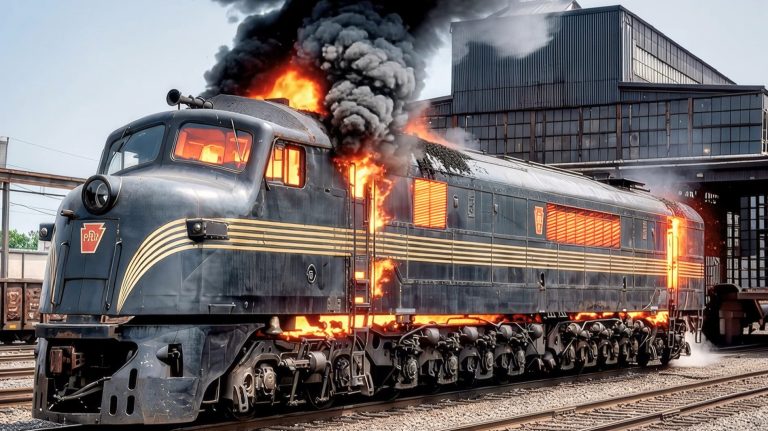
And once you see one, the name makes perfect sense.
The locomotive featured an extraordinary 2-D+D-2 wheel arrangement, giving it an enormous number of wheels and a very unusual appearance. Baldwin developed the concept in the 1940s as an attempt to create a high-powered locomotive capable of producing enormous horsepower without relying on a conventional A-B-A locomotive combination.
The original demonstrator was designed around multiple diesel engines, with the concept eventually developing into the 6,000-horsepower Centipede configuration. The problem with building everything into one machine.
The Centipede was technically impressive, but its complexity created operational and maintenance challenges. Instead of using several relatively conventional locomotive units that could be separated, replaced or serviced independently, Baldwin concentrated enormous mechanical complexity into one massive locomotive.
That made maintenance more difficult. And railroads were increasingly discovering that modularity was one of the great advantages of diesel-electric locomotives.
If one unit failed, another could be added. If a locomotive needed major work, it could be removed from the consist. The Centipede’s enormous size and unconventional design made that philosophy much harder to apply.
The interesting part
The Centipede wasn’t simply a bad locomotive. In fact, the original demonstrator was technically successful in testing. The problem was that the concept struggled to make economic sense compared with more conventional multi-unit diesel-electric arrangements.
That’s an important distinction. Sometimes a locomotive can work perfectly well mechanically and still be the wrong solution for a railroad.
3. Krauss-Maffei ML4000: When European Engineering Met American Mountains
In 1961, American railroads were looking for more powerful diesel locomotives for demanding mountain freight service. One unusual answer came from Germany.
The Krauss-Maffei ML4000 was a 4,000-horsepower diesel-hydraulic locomotive imported from Munich. Its technology was very different from the diesel-electric locomotives becoming dominant in North America.
Instead of using diesel engines to generate electricity for traction motors, the ML4000 used hydraulic transmission. That technology was already well established in Europe. But American railroading presented a very different environment.
The tunnel problem
One of the most interesting problems appeared in the long mountain tunnels of the American West. The ML4000 prototypes operated through the 6.2-mile Moffat Tunnel in Colorado. Inside the tunnel, the locomotive’s air intake arrangement could cause the engines to ingest exhaust gases. The problem became especially significant during slow-speed operation, when ventilation was limited.
Modifications were made to improve air intake, including ducting that brought cooler air from lower down on the locomotive.
But the larger problem remained. American railroads were discovering that a locomotive designed around European operating conditions did not automatically translate perfectly to North American freight service.
The Denver & Rio Grande Western eventually retired its three ML4000s in 1964.
The lesson
This wasn’t simply a story about “German technology failing in America.” It was a lesson in operating environment. A locomotive is not an isolated machine. Its success depends on the tracks, climate, grades, tunnels, maintenance practices, train lengths and operating patterns around it. And railroads are very good at exposing weaknesses that look invisible on the drawing board.
4. ALCO PA and the Model 244: When a Great Locomotive Met the Wrong Engine
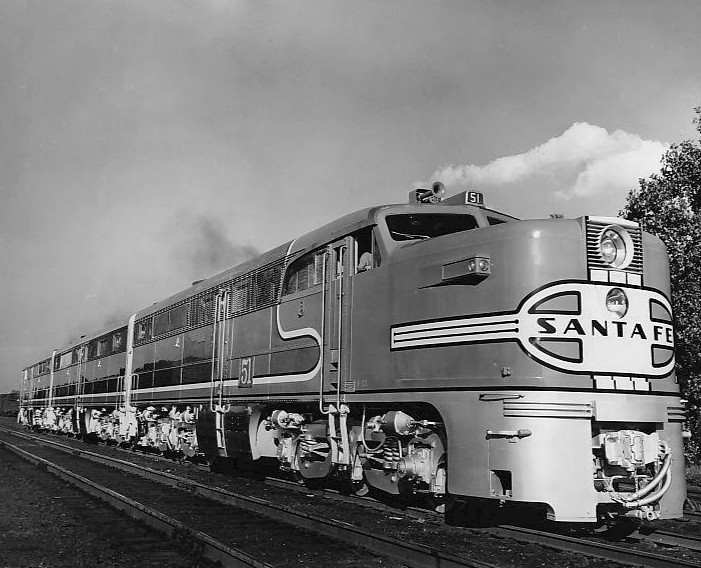
The ALCO PA is a fascinating case because the locomotive itself was anything but ugly or uninteresting. Introduced in 1946, the streamlined PA was one of the most distinctive American diesel passenger locomotives of its era. It had the looks. It had the horsepower. It had the market.
But underneath that beautiful body was a problem that would hurt ALCO badly. The Model 244 diesel engine was rushed into production after World War II and developed significant reliability problems, particularly in demanding mainline applications.
The PA-1 produced 2,000 horsepower and used a V-16 244 engine. Problems with the 244 included mechanical reliability issues that damaged confidence in ALCO’s mainline diesel products.
The problem wasn’t simply the PA
This is where the story gets more interesting. The 244 was not a complete disaster in every application. It could perform reasonably well in some lighter-duty ALCO locomotives, including certain road-switcher designs. But in high-demand mainline applications such as the PA and FA, its problems became much more damaging.
ALCO eventually developed the Model 251, which proved substantially more reliable. But by then, EMD had already established a strong position in the American diesel locomotive market. ALCO ultimately left the locomotive business in 1969. So the real lesson isn’t that “one bad engine destroyed ALCO.” It’s more interesting than that.
The 244 damaged ALCO’s reputation at precisely the moment when American railroads were deciding which diesel technology they could trust for decades to come.
5. Soviet AA20: Seven Driving Axles on One Rigid Frame
Now we get to one of the strangest steam locomotives ever built. The Soviet AA20-1 was completed in 1934 and featured an extraordinary 2-7-2 wheel arrangement.
That meant seven coupled driving axles were mounted in a single rigid frame. It was the only locomotive ever built with seven driving axles in one rigid frame. The idea was straightforward. A large number of driving axles would distribute the locomotive’s weight and provide enormous adhesion while keeping axle loading within the required limits.
The problem? Railroad curves don’t care how good an idea looks on paper.
A 10-meter problem
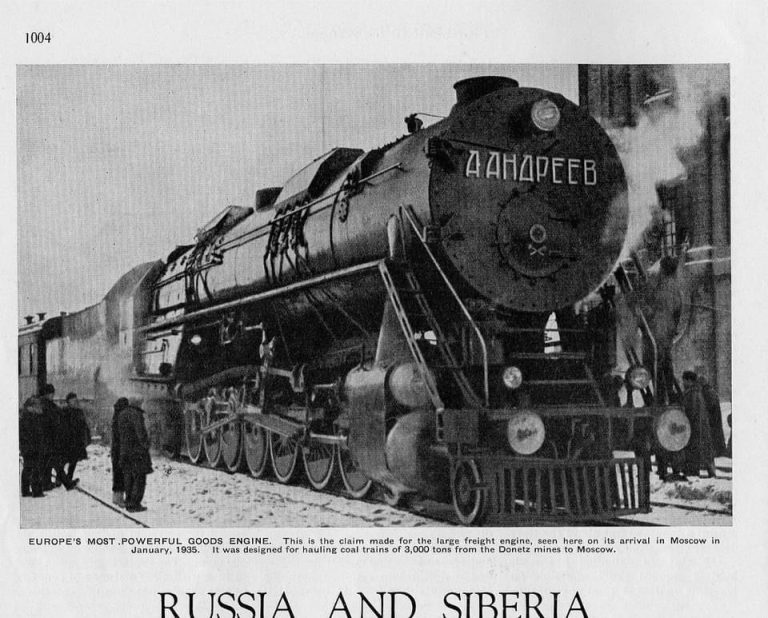
The AA20 had a very long rigid wheelbase. The locomotive’s fixed driving wheelbase was approximately 10 meters, making curve negotiation extremely difficult. Engineers tried several ways to make the locomotive negotiate curves, including allowing certain wheelsets to move laterally and using flangeless driving wheels.
But the design still caused problems with track and switches. The locomotive was also extremely large, creating difficulties with turntables and other railroad infrastructure. Only one AA20 was completed.
It was ultimately abandoned and later scrapped.
Why the AA20 is still fascinating
The AA20 wasn’t simply a stupid idea. Its designers were solving a genuine engineering problem: how do you put enormous tractive effort onto a railroad without exceeding axle-load limits? The answer was technically ingenious. The problem was that weight distribution isn’t the only thing that matters.
A locomotive also has to turn.
What These Failed Locomotives Teach Us
These five machines came from completely different countries, technologies and eras.
One used an unusual diesel engine. One attempted to concentrate enormous horsepower into a single locomotive.
One brought European diesel-hydraulic technology into American mountain territory.
One was undermined by an unreliable prime mover.
And one tried to put seven driving axles into a rigid steam locomotive frame.
Yet they all demonstrate the same fundamental principle:
A locomotive doesn’t exist in isolation.
It has to work as part of a complete railroad system. The engine has to match the track.
The power has to match the train. The cooling system has to match the climate.
The wheel arrangement has to match the curves. And maintenance has to make economic sense.
That’s why some of the most interesting locomotives in railroad history are not necessarily the ones that became commercial successes.
Sometimes, failure is where the engineering story gets really interesting.
From Railroad Engineering to Your Own Train Game
Real railroads don’t give engineers unlimited chances to get things wrong. A locomotive that overheats in a tunnel, damages the track or spends more time in the workshop than on the main line quickly becomes an expensive problem.
Luckily, your virtual railroad is a little more forgiving. In TrainStation 2 and TrainStation 3: Journey of Steel, you get to build the railroad, choose your locomotives and manage the freight operation yourself.
No railway board telling you that your locomotive is too experimental. No chief engineer asking why you just ordered 20 engines nobody has ever tested.
And, thankfully, no mechanic standing beside your locomotive holding a very expensive repair bill.
You build the network. You choose the trains. You decide where they go.
That’s the fun of running your own railroad.
And if you want to build a railroad empire where your locomotives actually work and don’t tear up the tracks or catch fire, we’ll see you in TrainStation 2 and TrainStation 3: Journey of Steel.
>> PLAY TrainStation 3: Journey of Steel HERE <<
>> PLAY TrainStation 2 HERE <<
FAQ: Worst Locomotives in Railroad History
What was the worst locomotive in history?
There is no objective single “worst locomotive.” Locomotives can fail for very different reasons, including unreliable engines, excessive maintenance requirements, unsuitable infrastructure or poor economics. The locomotives featured in this article are notable examples of designs that experienced significant operational or engineering problems.
Why did the British Rail Class 28 fail?
The British Rail Class 28 suffered from persistent problems with its Crossley HST V8 two-stroke diesel engine. British Rail considered replacing the engine, but the entire 20-locomotive fleet was ultimately withdrawn in 1967-68. One example survives today.
What was unusual about the Baldwin Centipede?
The Baldwin Centipede used an exceptionally unusual 2-D+D-2 wheel arrangement and was developed around a multi-engine diesel-electric concept. Its enormous size and complexity made it difficult to justify economically compared with more conventional locomotive combinations.
Why did the Krauss-Maffei ML4000 struggle in America?
The diesel-hydraulic ML4000 encountered operating challenges in American mountain service, including problems with exhaust gases entering the engine air intakes during operation in long tunnels. Modifications were made, but the design ultimately did not become a long-term solution for American railroads.
What was wrong with the ALCO 244 engine?
The ALCO 244 suffered significant reliability problems in demanding mainline applications, particularly in locomotives such as the PA and FA. ALCO later replaced it with the more reliable 251 engine.
Why was the Soviet AA20 unsuccessful?
The AA20 placed seven driving axles in one rigid frame, creating an exceptionally long rigid wheelbase. The locomotive experienced problems negotiating curves and switches and caused difficulties for railroad infrastructure. Only one example was completed.