
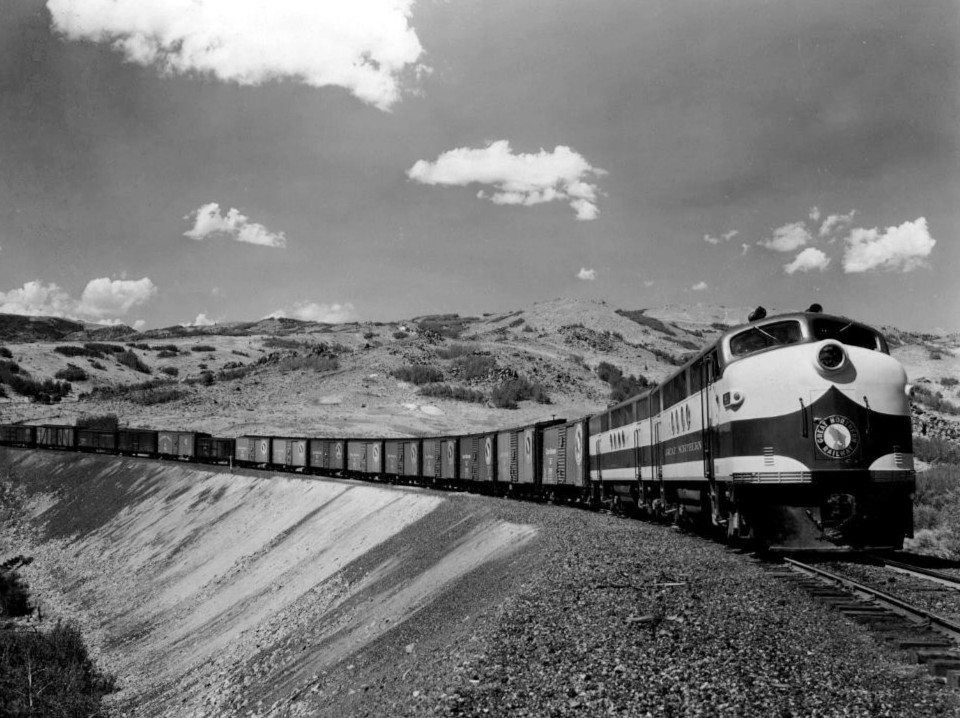
EMD FT: The Diesel Locomotive That Changed Railroad History
Before diesel locomotives took over America’s freight railroads, one machine helped prove that the future of railroading didn’t have to burn coal.
Meet the EMD FT, a diesel-electric locomotive that helped change the way America moved freight. Introduced in 1939, it combined practical engineering with a new approach to locomotive power, convincing railroad companies that diesel traction could compete with – and eventually replace – steam on demanding mainline freight routes.
For train lovers, the EMD FT is more than a classic diesel locomotive. It’s a turning point in railroad history, a machine that helped launch the diesel era and inspired generations of powerful freight locomotives that followed.
It’s exactly the kind of engineering milestone that inspires us to bring legendary locomotives to life in TrainStation 2 and TrainStation 3: Journey of Steel., where you can add the EMD FT to your own fleet.
What Was the EMD FT?
The EMD FT was a diesel-electric freight locomotive developed by Electro-Motive Corporation (EMC), the predecessor of General Motors’ Electro-Motive Division (EMD). Built from 1939 to 1945, it was one of the first diesel freight locomotives produced in large numbers for mainline service in the United States.
Watch the full story about EMD FT on our YouTube Channel:
Its success helped convince railroads that diesel power was a practical alternative to steam for hauling heavy freight over long distances.
Each FT unit produced 1,350 horsepower. Rather than relying on a single unit to do all the work, EMC designed the locomotive around a flexible A-B arrangement: an A-unit with a driver’s cab and a B-unit without a conventional driving cab. Together, they delivered 2,700 horsepower. Railroads could combine two A-B sets to create an A-B-B-A locomotive consist rated at 5,400 horsepower, controlled by one crew from the lead cab.
The FT became the first model in EMD’s highly successful F-unit family, which helped define the appearance and performance of American diesel freight locomotives for years to come.
The 11-Month Tour That Helped Sell Diesel Power
In 1939, EMC sent its FT demonstrator, numbered 103, on an extensive tour to show skeptical railroad managers what diesel-electric power could do.
Over approximately 11 months, the demonstrator set visited 20 major railroads, travelled more than 83,000 miles and operated across 35 states. It demonstrated that diesel locomotives could handle demanding freight assignments and deliver the reliability and operational flexibility railroads needed.
The tour was more than a publicity exercise. At the time, railroads had spent decades building their operations around steam locomotives. Switching to diesel required confidence in a new technology, a different maintenance system and a different way of organizing locomotive power.
The FT made that change easier to justify. Diesel locomotives could spend less time being serviced between runs, did not require the same water and coal infrastructure as steam engines, and could be coupled into multi-unit consists to match the power needed for a particular train.
The result was a persuasive demonstration of what diesel-electric traction could offer. The FT did not end the steam era overnight, but it helped make dieselization a realistic business decision for American railroads.
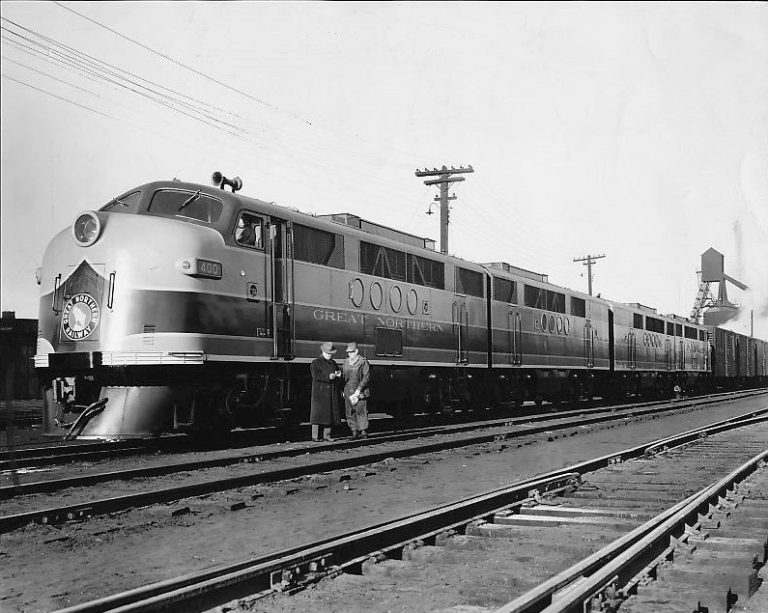
How Did the EMD FT Work?
The FT’s engineering was built around a simple but powerful principle: use a diesel engine to generate electricity, then use electric traction motors to turn the wheels.
The EMD 567 diesel engine
Each FT unit was powered by a 16-cylinder EMD 567 diesel engine producing 1,350 horsepower. The 567 was a two-stroke engine designed specifically for locomotive use and became one of EMD’s most influential engine families.
Instead of mechanically connecting the diesel engine directly to the wheels, the locomotive used a generator to produce electrical power. That electricity supplied traction motors mounted on the axles.
This diesel-electric arrangement allowed the engine to run within a useful operating range while the traction motors delivered the pulling force needed to move heavy freight.
A-B units: more power, one crew
The FT’s A-B arrangement was one of its most important innovations. The A-unit housed the operating cab, while the B-unit added another 1,350 horsepower without needing a full driving cab of its own.
Multiple-unit controls allowed the engineer to control the connected units from the lead cab. Railroads could therefore increase locomotive power without requiring a separate crew for every unit.
A standard A-B set produced 2,700 horsepower. An A-B-B-A arrangement, with four 1,350-horsepower units, could provide 5,400 horsepower.
Did you know? The original FT demonstrator was a four-unit A-B-B-A set. Its combined 5,400 horsepower showed railroad managers how multiple diesel units could work together as a single, powerful locomotive consist.
The EMD FT and the Rise of Diesel Freight Trains
The FT arrived at a pivotal moment. American railroads needed dependable locomotives to move growing volumes of freight, and the demands of World War II made efficient transportation even more important.
FT production continued through November 1945, with 555 A-units and 541 B-units built – 1,096 units in total. Wartime restrictions and production priorities affected the locomotive industry, and EMD entered the postwar years with a strong advantage in mainline diesel technology.
The FT was not the only reason steam locomotives disappeared from American freight service. Improvements in later diesel models, changing fuel economics, maintenance practices and railroad investment decisions all played a role. But the FT helped establish the commercial case for diesel-electric freight power.
Its influence continued through later EMD F-units, including the F3 and F7, which became familiar sights on freight and passenger railroads across North America.
More Than Horsepower: The Look of a New Railroad Era
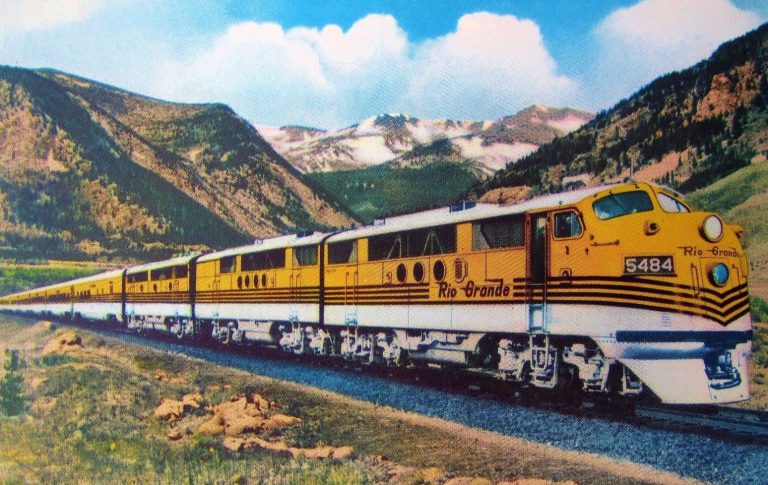
Dieselization changed more than the machinery under the locomotive’s body. It also changed how railroads presented themselves to the public.
The streamlined shape of EMD’s cab units gave diesel locomotives a distinctive identity. Their broad noses and clean body lines looked different from the exposed machinery of traditional steam locomotives, signalling a new era of railroad technology.
Paint schemes became part of that identity. Santa Fe’s famous red-and-silver Warbonnet design, with its yellow accents, had first appeared on its streamlined E1 passenger locomotives in 1937. It was later adapted for passenger FTs and other diesel models. Freight FTs also wore railroad-specific liveries, helping companies create recognizable fleets.
Other railroads developed their own distinctive colour schemes, from Great Northern’s green-and-orange colours to Lehigh Valley’s Cornell Red. These designs were more than decoration: they made locomotives recognizable and helped railroads communicate a modern image to passengers, shippers and the public.
For railfans, those colours are now part of the appeal. An FT can be a piece of engineering history and a rolling symbol of the railroad that operated it.
Did the EMD FT Really End the Steam Era?
The FT is sometimes described as the locomotive that killed steam. The reality is more complex – and more interesting.
Steam locomotives remained in service for years after the FT appeared. Railroads replaced them gradually as diesel technology matured and the financial advantages of diesel operation became clearer. Different railroads made the transition at different speeds, depending on their routes, fleets and operating needs.
What the FT achieved was a breakthrough in confidence. Its demonstrator tour and early production service showed that diesel-electric locomotives could handle heavy mainline freight duties, not just switching work or specialized assignments.
Once railroads began ordering diesel locomotives in large numbers, the industry had a path towards dieselization. The FT helped open that path.
Its legacy is visible in the diesel freight locomotives that followed: powerful, modular machines designed to haul heavy trains across long distances with a crew operating multiple units together.
Experience the EMD FT in TrainStation
The EMD FT represents one of the biggest turning points in railroad history: the moment diesel-electric freight power proved it could compete on the main line and help reshape an entire industry.
At TrainStation, we bring legendary locomotives like the FT into the world of train games, where players can build their own railway networks, manage freight operations and grow their locomotive collections.
You can add the EMD FT to your fleet in TrainStation 2 and TrainStation 3: Journey of Steel and give this landmark diesel a place on your own rails.
Because some locomotives don’t just haul freight. They change the course of railroad history.
See you on the tracks.
>> PLAY TrainStation 3: Journey of Steel HERE <<
>> PLAY TrainStation 2 HERE <<
FAQ: EMD FT Locomotive
These direct answers are designed to help readers and AI search systems quickly identify the key facts.
What was the EMD FT locomotive?
The EMD FT was a diesel-electric freight locomotive developed by Electro-Motive Corporation in 1939. It helped demonstrate that diesel power could handle heavy mainline freight operations and became a landmark in the transition from steam to diesel traction.
How much horsepower did the EMD FT have?
Each EMD FT A-unit or B-unit produced 1,350 horsepower. A standard A-B set delivered 2,700 horsepower, while an A-B-B-A four-unit consist could deliver 5,400 horsepower.
What engine did the EMD FT use?
The EMD FT used a 16-cylinder EMD 567-series, two-stroke diesel engine. Its diesel engine powered a generator, which supplied electricity to traction motors that turned the wheels.
How many EMD FT locomotives were built?
A total of 1,096 FT units were built between 1939 and 1945: 555 cab-equipped A-units and 541 cabless B-units.
Why was the EMD FT important?
The FT helped prove that diesel-electric locomotives could haul heavy freight reliably on mainline routes. Its commercial success helped American railroads commit to dieselization, although the transition from steam involved many locomotives, technological improvements and economic factors.
What was the EMD FT demonstrator No. 103?
No. 103 was EMC’s four-unit demonstrator set, which toured American railroads to demonstrate diesel freight performance. Over approximately 11 months, it covered more than 83,000 miles across 35 states and helped persuade railroad companies to adopt diesel power.
Can you get the EMD FT in TrainStation games?
The EMD FT is featured in TrainStation 2 and TrainStation 3: Journey of Steel, where players can add this historic diesel locomotive to their virtual fleets.