
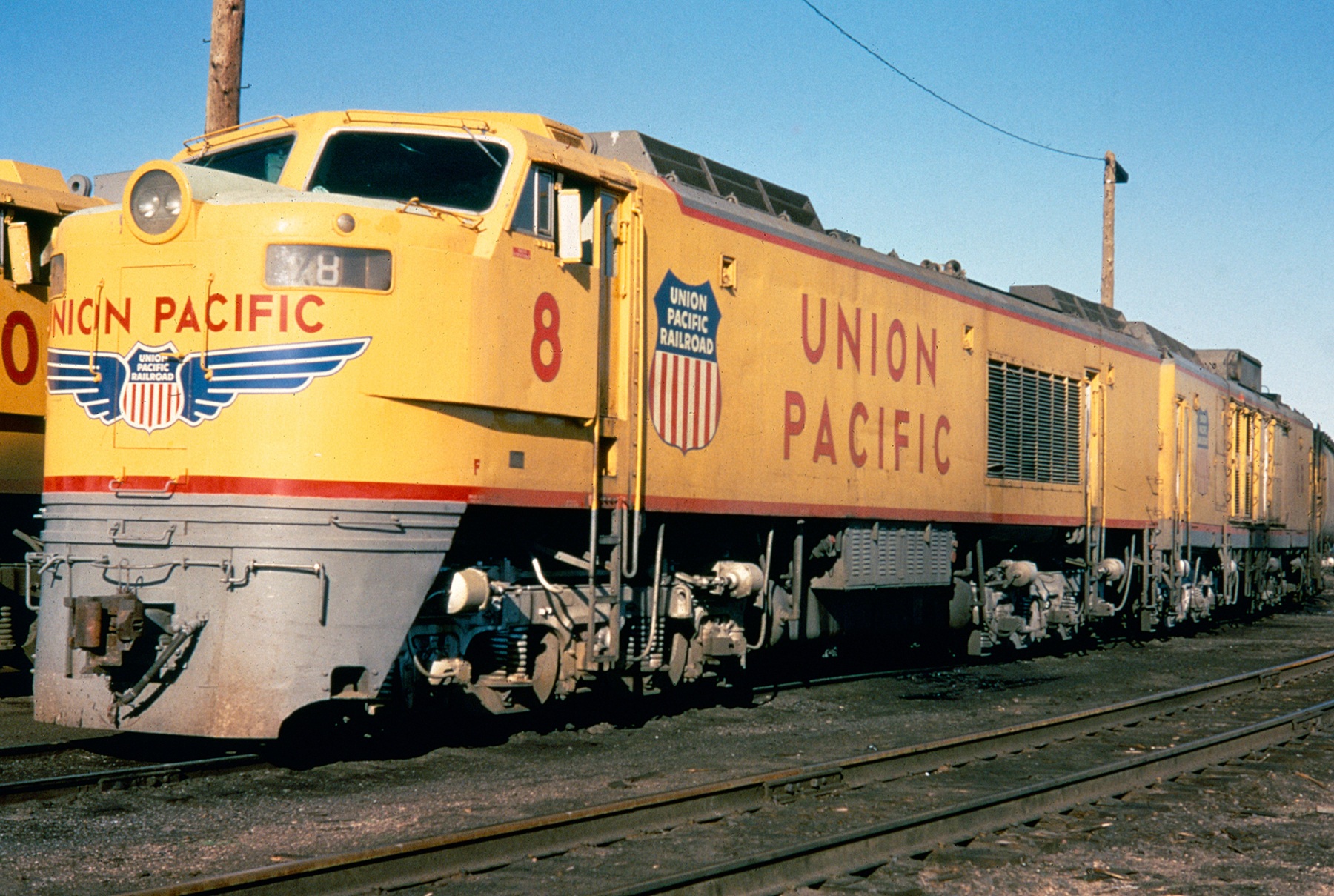
You are looking at a legendary jet engine… that was never allowed to touch the sky. It didn’t chug like a normal train. It roared like an aircraft taking off. Enthusiasts still call it “Big Blow,” and once you read why, you’ll understand.
In the latest episode of our Iron Icons series, we explore the history, engineering, and lesser-known stories behind the locomotive that turned raw jet power into one of the wildest experiments in American railroading.
▶ Watch the episode:
For train lovers, the GTEL is one of the wildest chapters in railroad history. For us, it’s exactly the kind of engineering story that keeps inspiring modern train games like TrainStation 2 and TrainStation 3: Journey of Steel.
What Is the Union Pacific GTEL?
In the late 1940s, Union Pacific needed serious power to move heavy freight across long distances. Rather than linking several diesel locomotives together, they asked General Electric for something bigger: one single locomotive with the power of a jet engine. The result was one of the most powerful locomotives in American history.
GE delivered a locomotive called the GTEL, short for Gas Turbine Electric Locomotive. Instead of a standard diesel engine, it used a turbine, the same basic technology found in jet aircraft.
The Numbers That Made It Famous
- Horsepower: up to 8,500 HP in its final version
- Fuel: Bunker C, a thick, low-cost leftover from oil refining
- Total built: 55 units
- Nickname: “Big Blow,” thanks to its deafening turbine roar
This was raw power, built for one job: hauling massive freight trains across the American West.
From Prototype to “Big Blow”
The story started with a single prototype in 1948. It proved the idea worked, and Union Pacific ordered more.
The second version earned the nickname “Veranda,” thanks to open side walkways added so crews could work near the turbine without overheating.
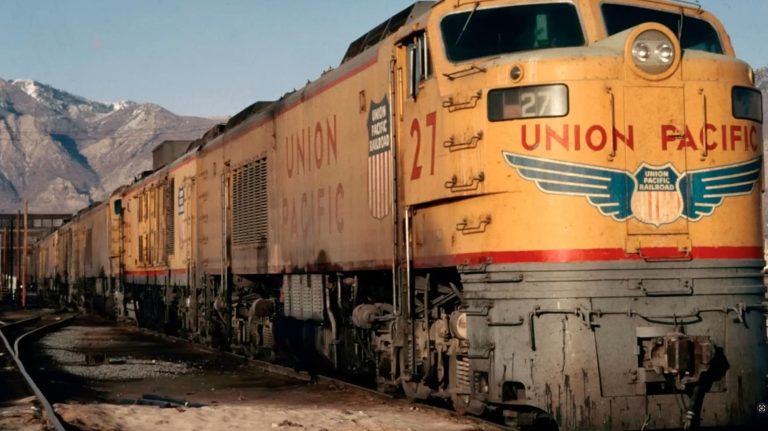
Then came the biggest version yet: the Third Generation, better known as “Big Blow.” These were massive three-unit trains, paired with their own fuel tender, and they became the most powerful locomotives Union Pacific ever ran.
A Locomotive That Melted the World Around It
Under full load, GTEL exhaust shot out at 150 mph (241 km/h), with temperatures reaching around 850°F (454°C), hot enough to melt asphalt overhead and cook birds mid-flight. Railroad crews learned to keep their distance when the turbine spooled up, since standing anywhere near the exhaust stack meant risking serious burns.
So Loud It Got Banned
The noise was just as extreme, with reports putting the turbine’s roar at over 120 decibels, loud enough to be felt in your chest before you even saw the train coming. In Los Angeles, residents complained of vibrations strong enough to crack plaster, and the backlash got the GTEL effectively banned from the city.
The Fuel That Ate The Train From Inside
To keep costs low, the GTEL burned Bunker C, cheap leftover oil that most industries didn’t want. The problem: this fuel contained vanadium and sodium, which turned corrosive at high heat and slowly ate away at the turbine blades from the inside. Engineers treated the fuel with an Epsom salt solution to slow the damage, but turbines still needed frequent repairs. Running a GTEL wasn’t just loud, it was a constant maintenance battle.
Why It Disappeared
But the real reason the GTEL disappeared had nothing to do with corrosion or noise. It came down to money. Bunker C stayed cheap for years, until other industries, including plastics manufacturing, started buying it too. Prices rose, and the GTEL’s one big advantage disappeared with them.
By the early 1970s, Union Pacific retired the fleet for good. Of the 55 built, only two survive today, quiet reminders of one of the loudest machines to ever run on American rails.
The Great Railfan Debate – Legend or Dead End?
Among train enthusiasts, one debate never really disappears:
Was the GTEL a stroke of engineering genius, or an over-engineered experiment doomed from the start?
Some argue it was never sustainable, a locomotive whose entire existence relied on one cheap fuel staying cheap. Others see it as a genuine leap forward, proof that a single locomotive could out-power anything else on the rails.
The truth is probably somewhere in between. Maybe that’s exactly why the GTEL still fascinates railfans today, a legend and a dead end at the same time.
From Real Railroads to TrainStation Games
Machines like the GTEL are exactly why we love building TrainStation 2 and TrainStation 3: Journey of Steel. Real engineering stories like this one inspire us to make our train management experiences as authentic as possible.
When we design and animate steam locomotives in our train games, we study real mechanisms, chassis movement, valve gear systems, historical references, and railroad operations, so every detail holds up for you.
Try it for yourself! See you on the tracks.
>> PLAY TrainStation 3: Journey of Steel HERE <<
>> PLAY TrainStation 2 HERE <<
Follow TrainStation Games:
YouTube Channel: https://www.youtube.com/@TrainStation-Games
Facebook: https://www.facebook.com/TrainStation
Instagram: https://www.instagram.com/trainstationgames
Discord: https://discord.gg/cse2scNDXj
WhatsApp Channel: https://www.whatsapp.com/channel/0029VanaBFD2UPBLuQqWR82q